





The Global Self-Service Kiosk Market Is Entering a New Growth Phase
The self-service kiosk industry has evolved from a niche automation solution into a core component of digital transformation across multiple industries. Over the past decade, businesses have increasingly adopted self-service technologies to reduce operational costs, improve customer experiences, and address ongoing labor shortages.
Today, self-service kiosks are no longer limited to fast-food restaurants. They are widely deployed in retail stores, hotels, airports, hospitals, banks, government service centers, cinemas, transportation hubs, and educational institutions.
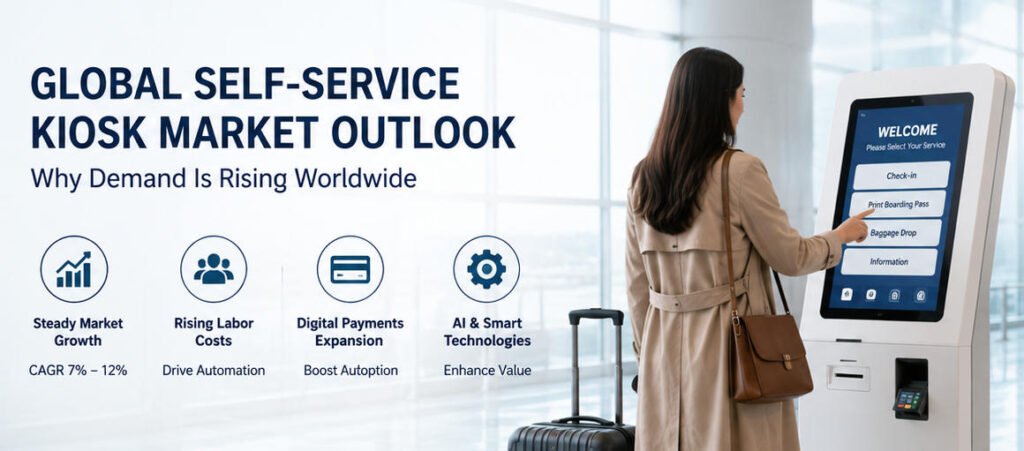
According to multiple market research organizations including Grand View Research, Fortune Business Insights, MarketsandMarkets, and Mordor Intelligence, the global self-service kiosk market is expected to maintain steady growth through 2030. Although estimates vary, most reports forecast an annual compound growth rate (CAGR) between 7% and 12%, driven by accelerating digital transformation worldwide.
For kiosk manufacturers, system integrators, software providers, and business owners, the coming years represent one of the strongest growth opportunities the industry has seen.
Current Market Size and Growth Outlook
Industry analysts generally agree that the market is experiencing sustainable long-term expansion rather than temporary growth.
Several factors are driving this momentum:
- Rising labor costs across developed and emerging economies
- Increasing consumer acceptance of self-service technology
- Growth of cashless and contactless payment systems
- Continuous improvements in touchscreen hardware
- Artificial Intelligence integration
- Cloud-based kiosk management platforms
- Expansion of omnichannel retail strategies
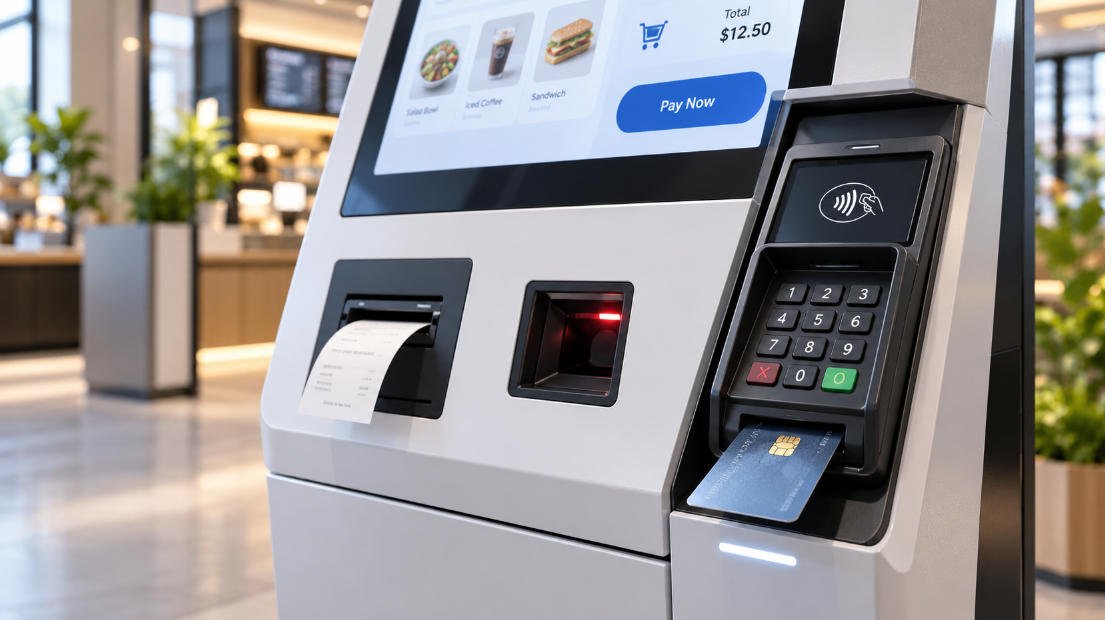
Unlike previous generations of kiosks that only performed simple check-in or information functions, today’s intelligent kiosks integrate payment processing, identity verification, receipt printing, barcode scanning, facial recognition, inventory management, and remote monitoring into one platform.
Businesses are now viewing kiosks as operational infrastructure rather than optional equipment.
Why Businesses Continue Investing in Self-Service Kiosks
1. Labor Shortages Are Becoming Permanent
Many countries continue facing labor shortages in retail, hospitality, healthcare, and food service.
Instead of replacing employees, self-service kiosks help businesses automate repetitive tasks, allowing staff to focus on customer service and higher-value work.
For quick-service restaurants, a single ordering kiosk can process hundreds of orders daily without increasing staffing requirements.
2. Customers Prefer Faster Self-Service
Consumer behavior has changed significantly after the pandemic.
Many customers now expect:
- Minimal waiting times
- Contactless payments
- Digital receipts
- Personalized ordering
- Self-checkout options
Studies consistently show that customers appreciate having the option to control their purchasing experience, especially during busy periods.
3. Digital Payments Continue Expanding
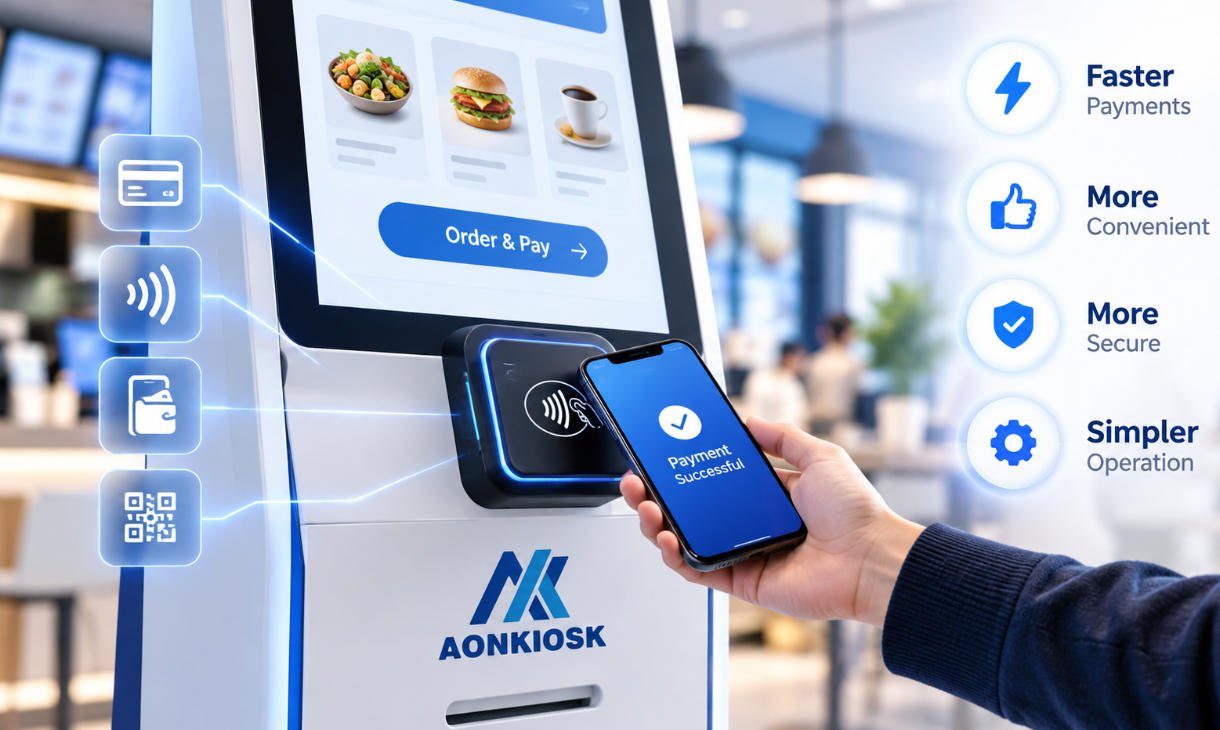
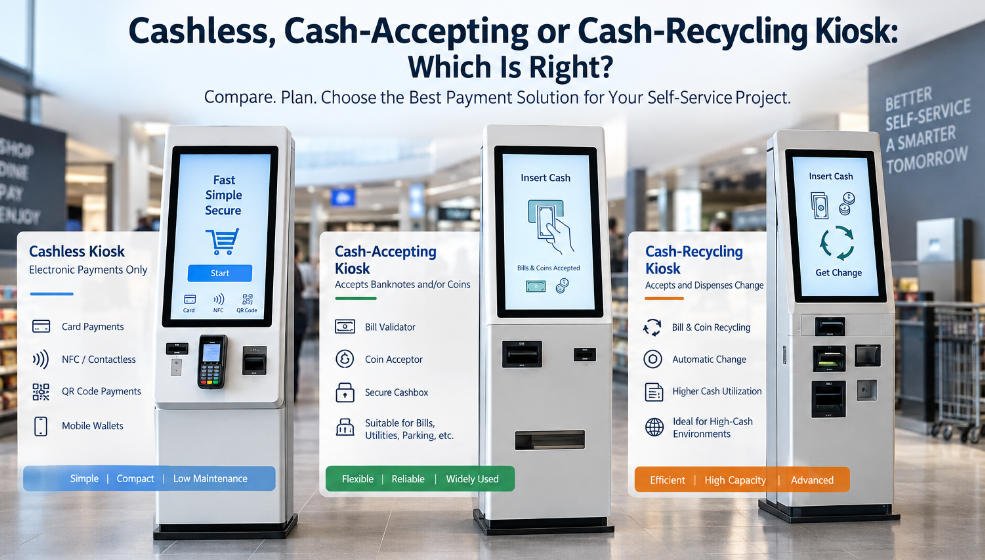
The rapid adoption of NFC payments, mobile wallets, QR payments, and integrated payment gateways has significantly accelerated kiosk deployment.
Modern kiosks now support:
- Credit cards
- EMV chip cards
- Contactless payment
- Apple Pay
- Google Pay
- QR code payment
- Mobile wallets
- Gift cards
- Loyalty systems
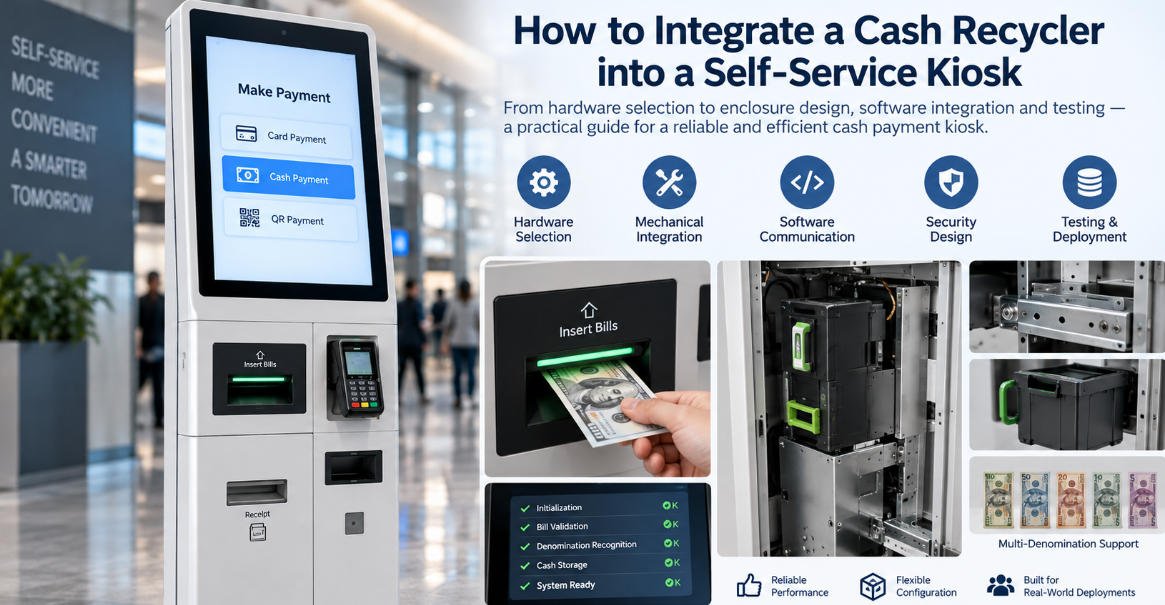
This flexibility allows businesses to serve customers more efficiently while reducing cash handling.
4. Artificial Intelligence Is Increasing Kiosk Value
AI has become one of the biggest technology trends influencing self-service kiosks.
New AI capabilities include:
- Personalized product recommendations
- Voice interaction
- Smart search
- Predictive ordering
- Dynamic digital menus
- Customer behavior analysis
- Remote diagnostics
- Equipment health monitoring
Rather than replacing kiosk hardware, AI is making kiosks smarter and more profitable.
Regional Market Analysis
North America
North America remains the world’s largest self-service kiosk market.
The United States continues to lead adoption in:
- Quick-service restaurants
- Retail self-checkout
- Healthcare registration
- Airport check-in
- Banking automation
Large restaurant chains have accelerated digital ordering strategies, creating continuous demand for commercial kiosk hardware.
Europe
European businesses continue investing heavily in automation to improve operational efficiency while addressing rising labor costs.
Major growth sectors include:
- Supermarkets
- Public transportation
- Government services
- Hotel self-check-in
- EV charging payment terminals
Countries such as Germany, the United Kingdom, France, and the Nordic region remain key adopters.
Asia-Pacific
Asia-Pacific is expected to become the fastest-growing regional market over the next decade.
Growth is being supported by:
- Smart city initiatives
- Rapid urbanization
- Expanding retail chains
- Mobile payment ecosystems
- Government digitalization projects
China, Japan, South Korea, India, Singapore, and Australia are investing heavily in self-service infrastructure.
China has also become one of the world’s leading manufacturing hubs for kiosk hardware, supplying OEM and ODM solutions to global brands.
Middle East and Africa
Although still an emerging market, countries across the Middle East are deploying increasing numbers of kiosks in airports, shopping malls, hospitals, and government facilities as part of national digital transformation initiatives.
Industry Applications Driving Market Growth
Quick Service Restaurants (QSR)
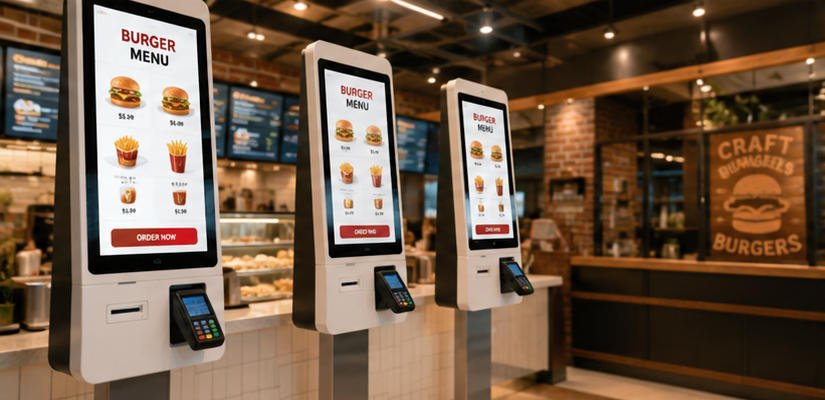
Restaurant self-ordering kiosks remain the fastest-growing application.
Benefits include:
- Reduced order errors
- Faster ordering
- Visual upselling
- Higher average ticket value
- Improved operational efficiency
Many restaurant operators report measurable increases in average order value after introducing self-ordering systems.
Retail and Self-Checkout
Retailers continue investing in automation to reduce checkout queues.
Modern retail kiosks support:
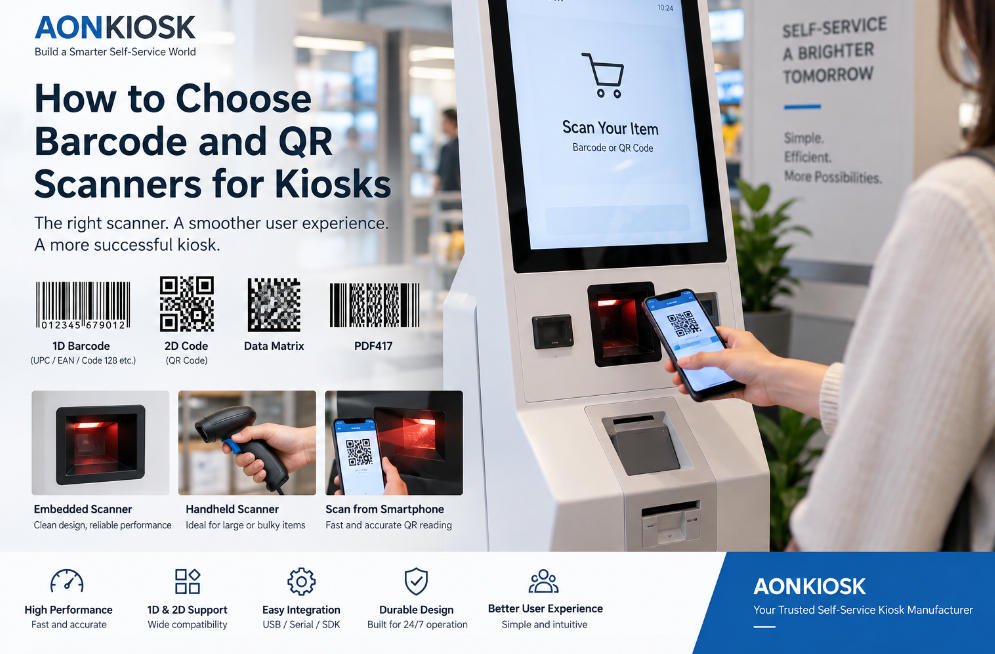
- Barcode scanning
- Product lookup
- Loyalty integration
- Self-payment
- Returns processing
- Click-and-collect pickup
The rise of unattended retail is creating additional demand for flexible kiosk solutions.
Hotels and Hospitality
Hotels increasingly deploy self-check-in kiosks to reduce front desk congestion.
Typical functions include:
- ID scanning
- Passport verification
- Payment processing
- Room key card dispensing
- Digital signature collection
- Invoice printing
Self-service solutions allow hotels to provide 24/7 guest services with fewer staffing requirements.
Healthcare
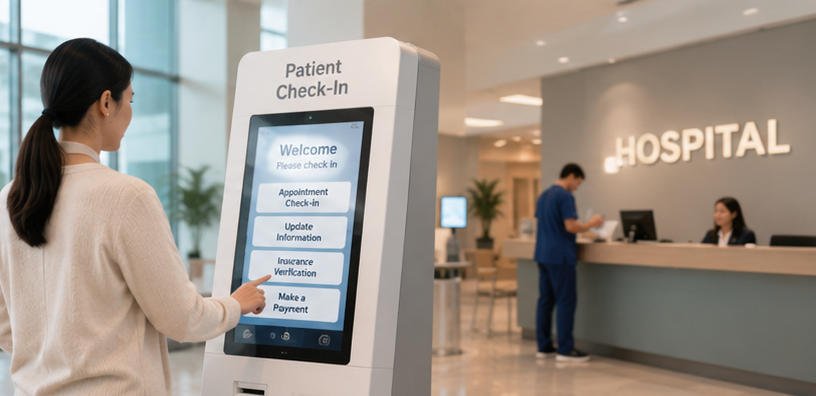
Hospitals and clinics use kiosks for:
- Patient registration
- Appointment check-in
- Queue management
- Insurance verification
- Payment collection
- Medical record updates
Healthcare providers continue modernizing patient workflows through automation.
Transportation
Airports, railway stations, and public transit systems increasingly rely on self-service kiosks for ticketing and passenger management.
These systems reduce waiting times while improving service efficiency during peak travel periods.
Technology Trends Shaping the Next Generation of Kiosks
Several technologies are redefining the industry.
Cloud-Based Device Management
Businesses can remotely update software, monitor hardware status, deploy applications, and troubleshoot devices from centralized management platforms.
Modular Hardware Design
Manufacturers increasingly build modular kiosks that allow businesses to integrate various peripherals including:
- Payment terminals
- Barcode scanners
- RFID readers
- Passport scanners
- Cameras
- Receipt printers
- Card dispensers
This reduces customization costs while shortening production cycles.
AI-Powered Personalization
Future kiosks will offer increasingly personalized experiences using purchasing history, loyalty data, and contextual recommendations.
Sustainability
Energy-efficient components, recyclable materials, and paperless digital receipts are becoming purchasing considerations for enterprise buyers.
Challenges Facing the Industry
Despite strong growth, manufacturers and solution providers continue facing several challenges.
These include:
- Hardware standardization
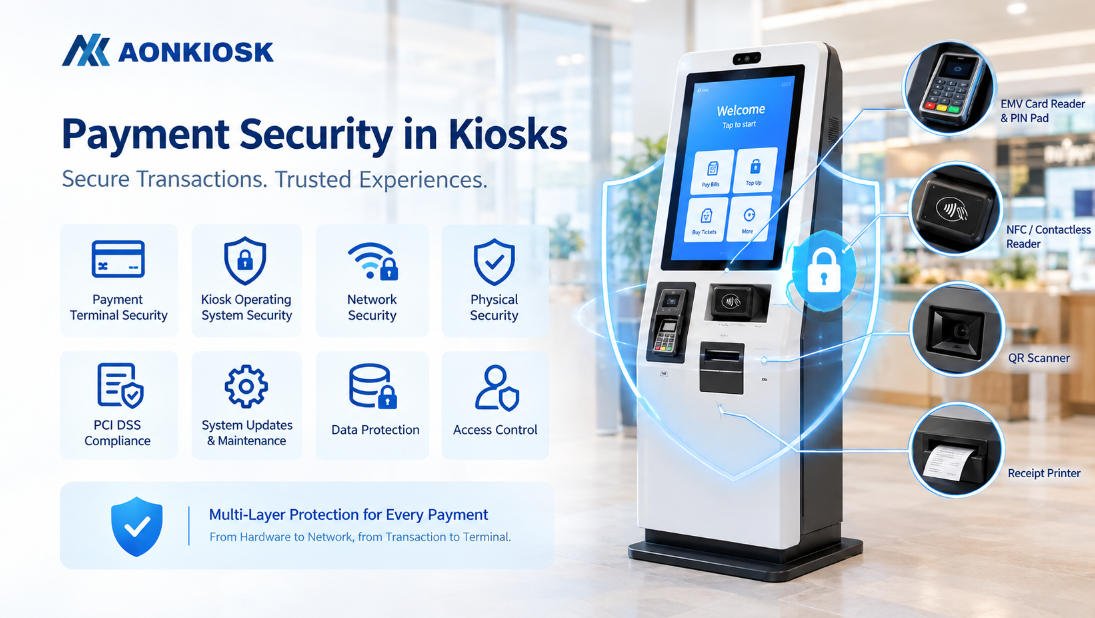
- Cybersecurity requirements
- Software compatibility
- Long deployment cycles
- Payment certification
- International regulatory compliance
- Rising component costs
Companies capable of providing reliable hardware, flexible customization, and long-term technical support will maintain competitive advantages.
Why China Continues to Strengthen Its Position in Kiosk Manufacturing
China has become one of the world’s leading production centers for self-service kiosk hardware.
Manufacturers offer:
- OEM and ODM development
- Industrial metal fabrication
- Touchscreen integration
- Payment module integration
- Custom branding
- Low-volume prototyping
- Mass production
- Global export experience
For overseas distributors, software companies, and system integrators, partnering with experienced Chinese manufacturers significantly reduces development costs while shortening time to market.
Outlook Through 2030
The global self-service kiosk market is expected to remain one of the fastest-growing segments within commercial automation.
Businesses are no longer asking whether they should adopt self-service technology. Instead, they are evaluating how quickly they can deploy scalable solutions that improve efficiency, reduce operating costs, and enhance customer satisfaction.
As AI, cloud computing, digital payments, and smart retail technologies continue to evolve, self-service kiosks will become increasingly intelligent, interconnected, and industry-specific.
Manufacturers capable of combining reliable hardware engineering with flexible customization and global support will be well positioned to meet the next wave of market demand.
For companies planning long-term automation strategies, investing in high-quality self-service kiosk solutions today represents not only an operational upgrade but also a competitive advantage for the future.
About AONKIOSK
AONKIOSK is a professional OEM/ODM self-service kiosk manufacturer specializing in commercial hardware solutions for retail, hospitality, healthcare, transportation, banking, and public services. With extensive experience in industrial design, metal fabrication, touchscreen integration, payment systems, and customized kiosk development, AONKIOSK helps global partners accelerate self-service deployments with reliable, scalable, and fully customized hardware solutions.