





Market Drivers, Industry Trends, and Business Opportunities
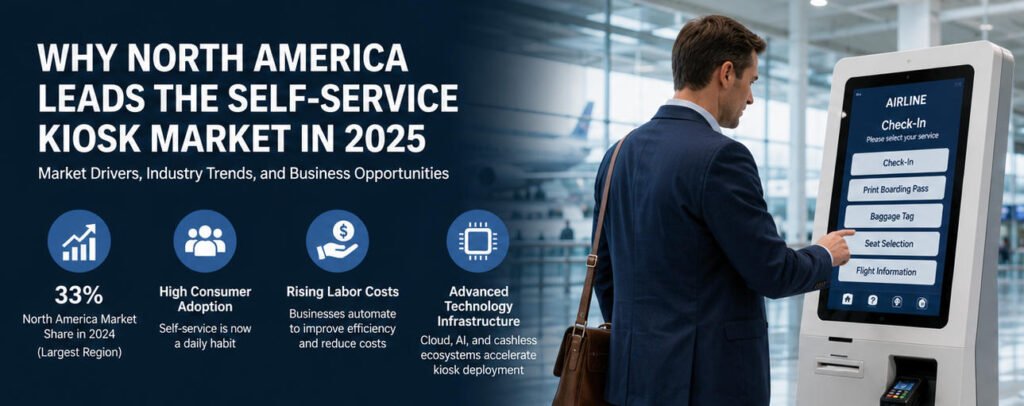
As businesses across the world continue investing in automation, North America remains the largest and most mature market for self-service kiosks. From restaurant self-ordering terminals and retail self-checkout systems to hospital registration kiosks and airport check-in stations, North America has become the benchmark for large-scale self-service deployment.
According to Grand View Research, North America accounted for approximately 33% of the global self-service kiosk market revenue in 2024, making it the world’s largest regional market. The report also forecasts continued expansion through 2030 as organizations accelerate digital transformation and customer-facing automation.¹
For kiosk manufacturers, software developers, and system integrators, understanding why North America continues to lead the industry provides valuable insights into where global kiosk technology is heading.
North America Is Setting the Pace for Self-Service Innovation
Unlike many emerging markets that are still exploring self-service technologies, North America has already integrated kiosks into everyday business operations.
Consumers routinely use self-service kiosks to:
- Order food at restaurants
- Check out groceries
- Print airline boarding passes
- Register for medical appointments
- Purchase movie tickets
- Pay utility bills
- Access government services
- Check into hotels
This widespread adoption has created one of the world’s most mature kiosk ecosystems, where both consumers and businesses view self-service as a standard service option rather than a novelty.
Five Key Reasons North America Leads the Market
1. Rising Labor Costs Continue to Accelerate Automation
One of the biggest drivers behind kiosk adoption is labor economics.
Restaurants, retailers, and hospitality businesses across the United States and Canada continue facing higher wages, employee turnover, and ongoing staffing shortages.
Rather than replacing employees, businesses increasingly deploy self-service kiosks to automate repetitive customer interactions while allowing staff to focus on customer assistance, food preparation, or specialized services.
For many operators, kiosks have become an effective way to improve productivity without compromising customer experience.
2. Consumers Have Fully Accepted Self-Service
North American consumers are among the earliest adopters of digital technologies.
Years of exposure to ATMs, airline kiosks, supermarket self-checkout systems, and mobile applications have made self-service interactions part of everyday life.
Today’s customers increasingly expect:
- Shorter queues
- Contactless payment
- Digital ordering
- Personalized recommendations
- Faster transactions
- Omnichannel experiences
This high level of consumer acceptance significantly lowers deployment barriers for businesses adopting kiosk solutions.
3. The Restaurant Industry Continues to Drive Demand
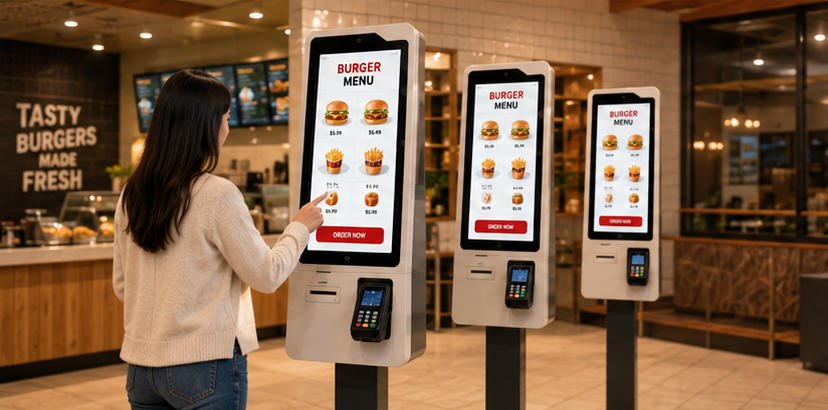
Quick Service Restaurants (QSRs) remain the largest application segment for self-service kiosks in North America.
Major restaurant brands continue expanding self-ordering programs because kiosks deliver measurable business benefits, including:
- Reduced ordering errors
- Faster service during peak hours
- Higher average order values through visual upselling
- Improved order customization
- Reduced front-counter congestion
Many restaurant operators report that customers ordering through kiosks are more likely to purchase premium items, meal upgrades, and add-ons because digital menus consistently present upselling opportunities.
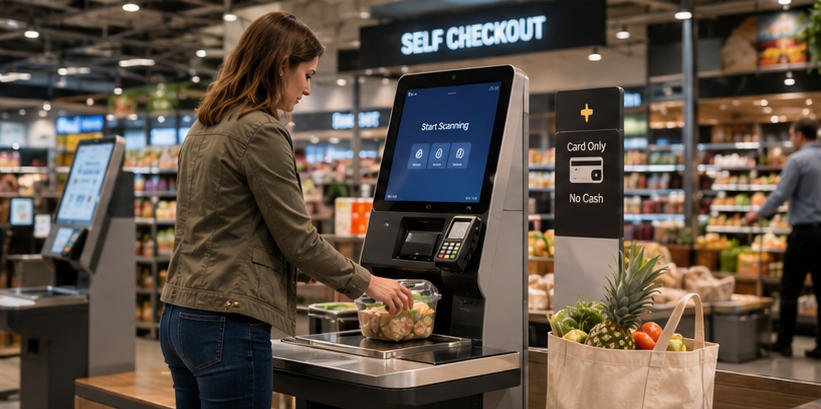
4. Retailers Are Investing in Self-Checkout
Retail automation has become another major growth engine.
Supermarkets, convenience stores, pharmacies, and big-box retailers continue expanding self-checkout installations to improve operational efficiency.
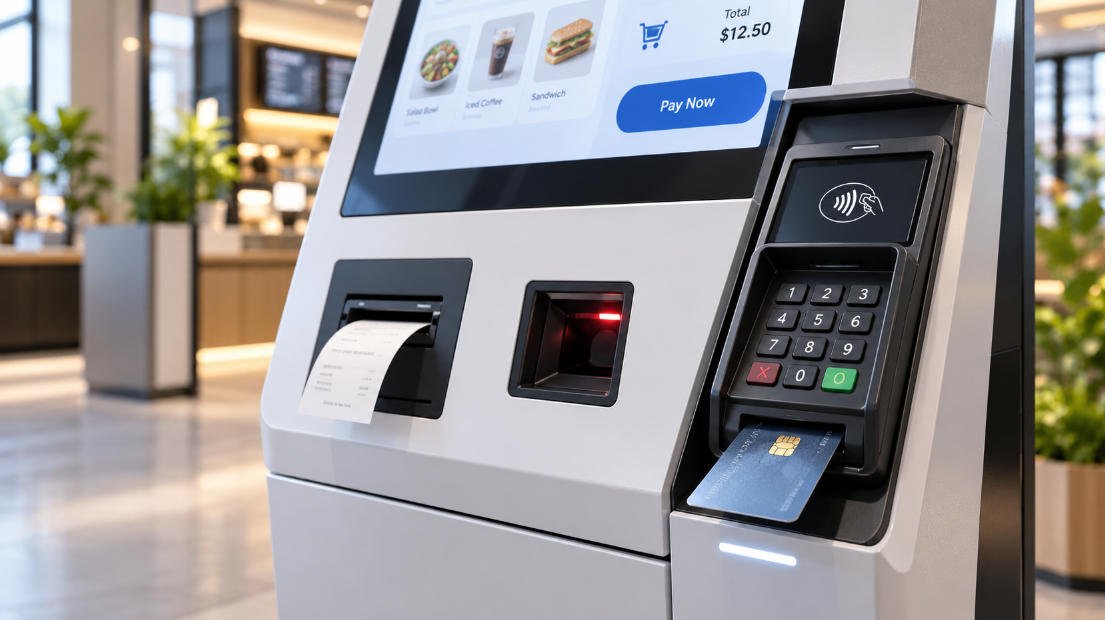
Modern retail kiosks now integrate:
- Barcode scanning
- Cashless payment
- Loyalty programs
- Digital coupons
- Product lookup
- Age verification
- Receipt printing
Self-checkout also supports flexible store formats, including smaller urban locations and extended operating hours.
5. Strong Digital Infrastructure Supports Deployment
North America benefits from one of the world’s most advanced digital ecosystems.
Businesses have access to:
- High-speed internet
- Cloud infrastructure
- Reliable payment networks
- Mature POS ecosystems
- Cybersecurity standards
- Enterprise software platforms
These technologies make it easier to deploy, monitor, update, and manage thousands of kiosks across multiple locations from centralized cloud platforms.
Industry Adoption Across Major Sectors
Quick-Service Restaurants
Restaurant kiosks have become standard equipment for many national chains.
Key advantages include:
- Self-ordering
- Cashless payment
- Digital menu management
- Loyalty integration
- Multilingual support
Restaurant operators increasingly view kiosks as revenue-generating assets rather than simply labor-saving devices.
Retail
Retailers continue investing heavily in self-checkout technology to reduce wait times while improving operational efficiency.
Applications include:
- Grocery stores
- Convenience stores
- Department stores
- Electronics retailers
- Home improvement centers
Retail remains one of the fastest-growing verticals for kiosk deployment.
Healthcare
Healthcare providers increasingly rely on kiosks for:
- Patient registration
- Appointment check-in
- Insurance verification
- Queue management
- Payment collection
Digital registration reduces paperwork while allowing medical staff to spend more time with patients.
Airports and Transportation
North America has one of the world’s most developed transportation kiosk networks.
Airports deploy kiosks for:
- Boarding pass printing
- Baggage tag printing
- Passport verification
- Flight information
- Ticket purchasing
Public transportation agencies also use kiosks for ticket sales and passenger information.
Hotels
Hotel self-check-in continues expanding across North America.
Guests increasingly expect to:
- Check in independently
- Verify identity
- Make payments
- Receive room keys
- Print invoices
Hotels benefit from shorter queues, improved guest satisfaction, and round-the-clock service availability.
Technology Trends Fueling Future Growth
North America’s leadership is also driven by rapid adoption of emerging technologies.
Artificial Intelligence
AI-powered kiosks now provide:
- Personalized recommendations
- Voice interaction
- Customer analytics
- Dynamic promotions
- Predictive maintenance
AI is transforming kiosks from transaction terminals into intelligent customer engagement platforms.
Cloud-Based Device Management
Enterprise operators increasingly manage kiosk fleets remotely.
Cloud platforms enable:
- Remote software updates
- Device monitoring
- Performance analytics
- Security patch deployment
- Real-time diagnostics
This significantly lowers maintenance costs while improving system uptime.
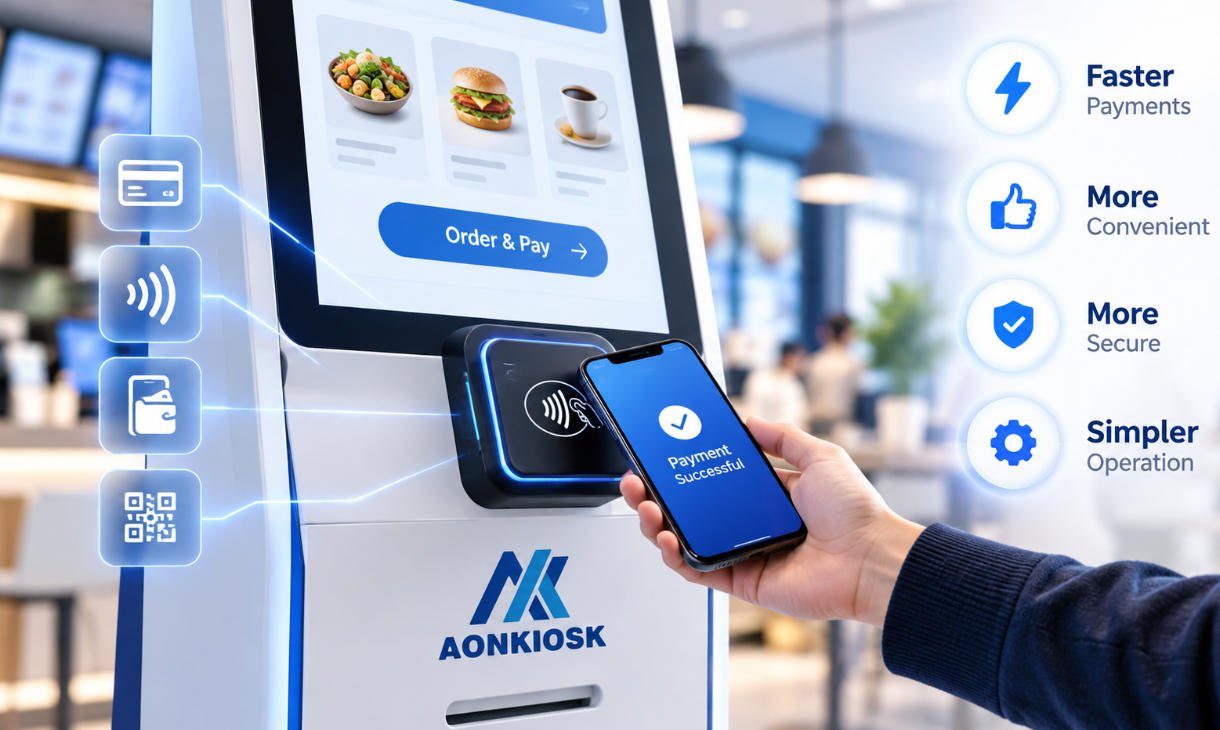
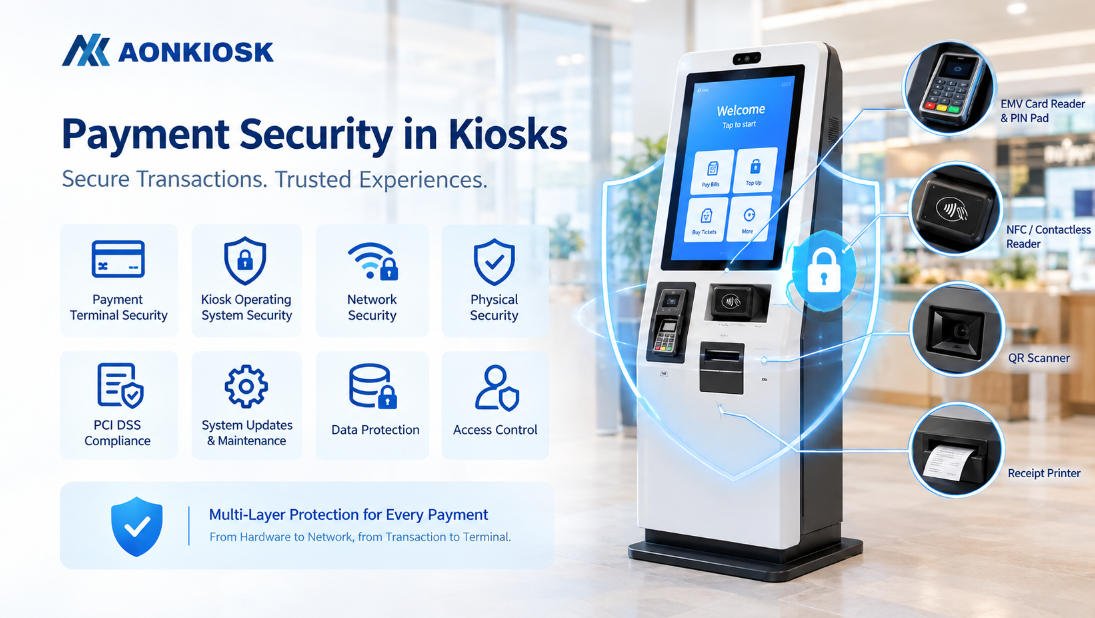
Contactless Payments
Digital payment adoption remains exceptionally high.
Modern kiosks commonly support:
- EMV cards
- NFC payment
- Apple Pay
- Google Pay
- Mobile wallets
- QR code payment
The continued growth of cashless transactions further accelerates kiosk adoption.
Why North America Matters to Global Kiosk Manufacturers
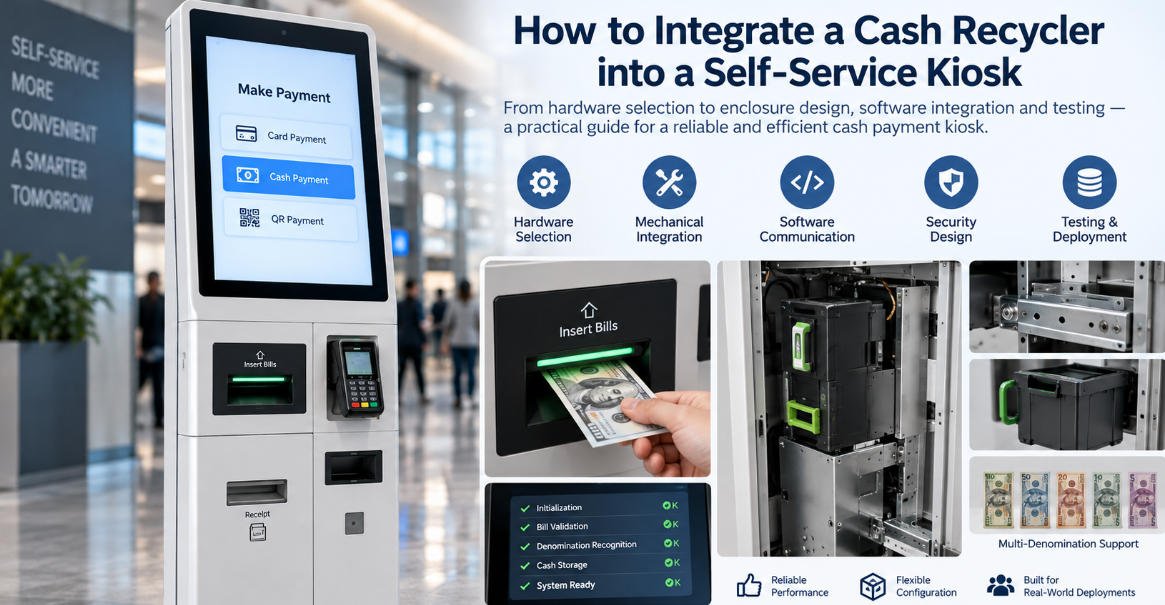
Although North America represents the largest end-user market, much of the world’s commercial kiosk hardware is manufactured overseas through experienced OEM and ODM partners.
For manufacturers serving North American customers, several factors have become increasingly important:
- Industrial-grade reliability
- ADA-compliant designs
- Modular hardware architecture
- Payment device compatibility
- UL/FCC compliance
- Flexible customization
- Long product lifecycle support
Chinese kiosk manufacturers with strong engineering capabilities have become strategic partners for software companies, distributors, and system integrators serving the North American market.
Market Outlook
North America is expected to remain the world’s leading self-service kiosk market throughout the remainder of the decade.
While emerging markets will experience faster percentage growth, North America will continue setting industry standards for hardware innovation, software integration, customer experience, and commercial deployment.
For businesses planning automation strategies, the region provides valuable insight into the future direction of self-service technologies.
Manufacturers capable of delivering reliable hardware, seamless peripheral integration, and scalable OEM/ODM customization will be well positioned to support the next generation of intelligent self-service solutions.
About AONKIOSK
AONKIOSK is a professional OEM and ODM self-service kiosk manufacturer providing customized hardware solutions for restaurant self-ordering, retail self-checkout, hotel check-in, healthcare registration, ticketing, payment, and visitor management applications. With extensive experience in industrial design, metal fabrication, touch display integration, and payment hardware, AONKIOSK helps global partners develop reliable, deployment-ready kiosk solutions for North American and international markets.
References
- Grand View Research. Self-Service Kiosk Market Size, Share & Trends Report, 2025–2030.
https://www.grandviewresearch.com/industry-analysis/self-service-kiosk-market-report - Grand View Research. Self-Service Kiosk Market Press Release.
https://www.grandviewresearch.com/press-release/global-self-service-kiosk-market - U.S. Bureau of Labor Statistics (Employment Cost Index and labor market data).
https://www.bls.gov/ (used as background for labor cost trends) - National Retail Federation (Retail technology adoption reports).
https://nrf.com/ - National Restaurant Association. State of the Restaurant Industry Reports.
https://restaurant.org/