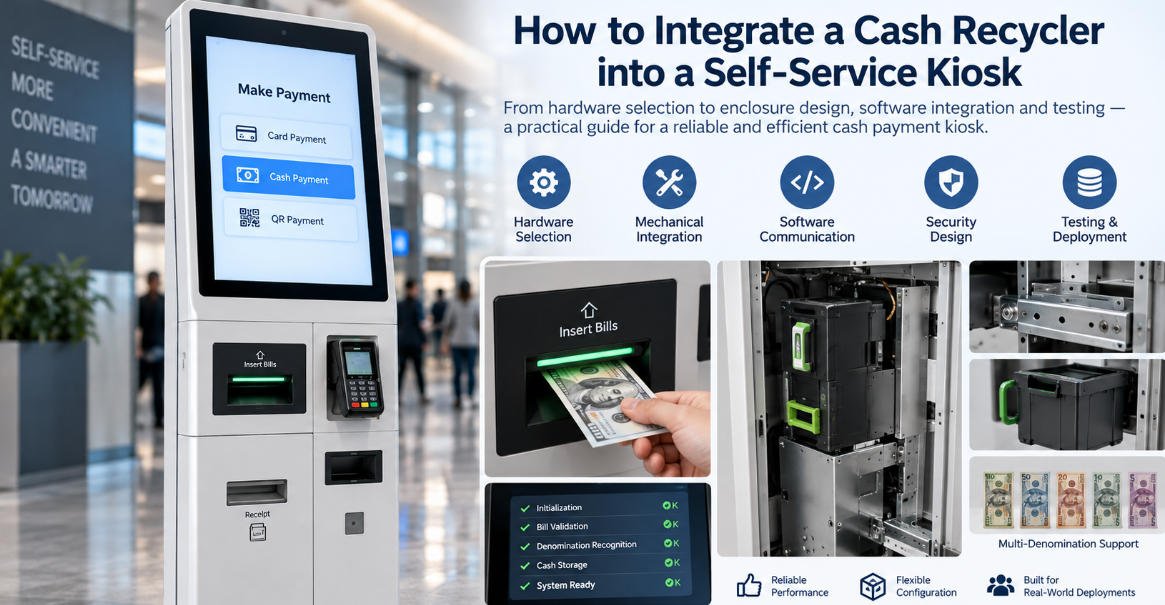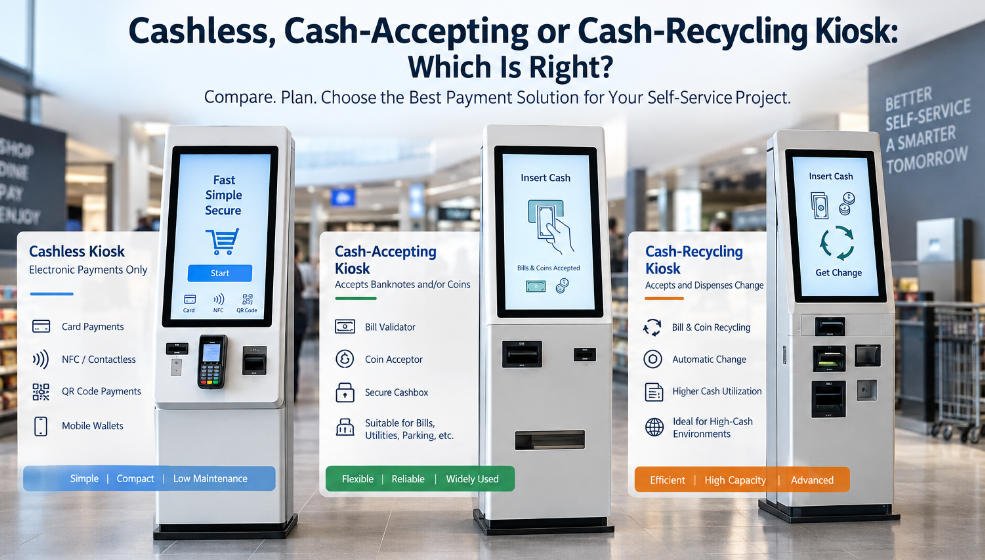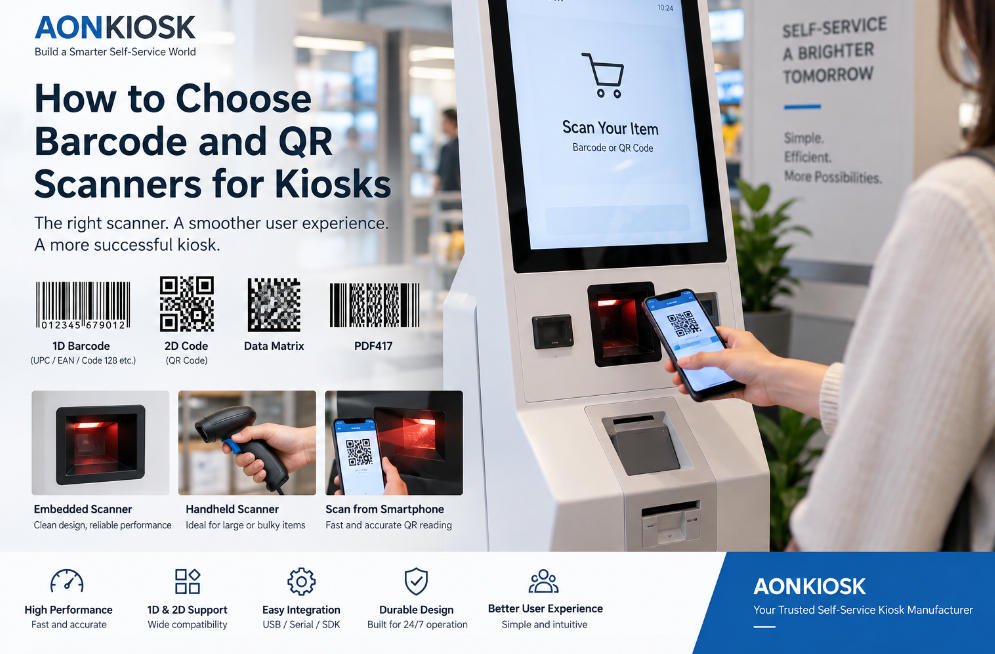






The retail industry is undergoing one of its most significant operational transformations since the introduction of barcode scanning. What began as simple self-checkout terminals has evolved into an intelligent ecosystem of self-service kiosks, AI-powered checkout systems, smart vending machines, and fully unattended retail stores.
Driven by labor shortages, rising operating costs, digital payment adoption, and changing consumer expectations, retailers worldwide are investing heavily in automation technologies that improve efficiency while enhancing the shopping experience.
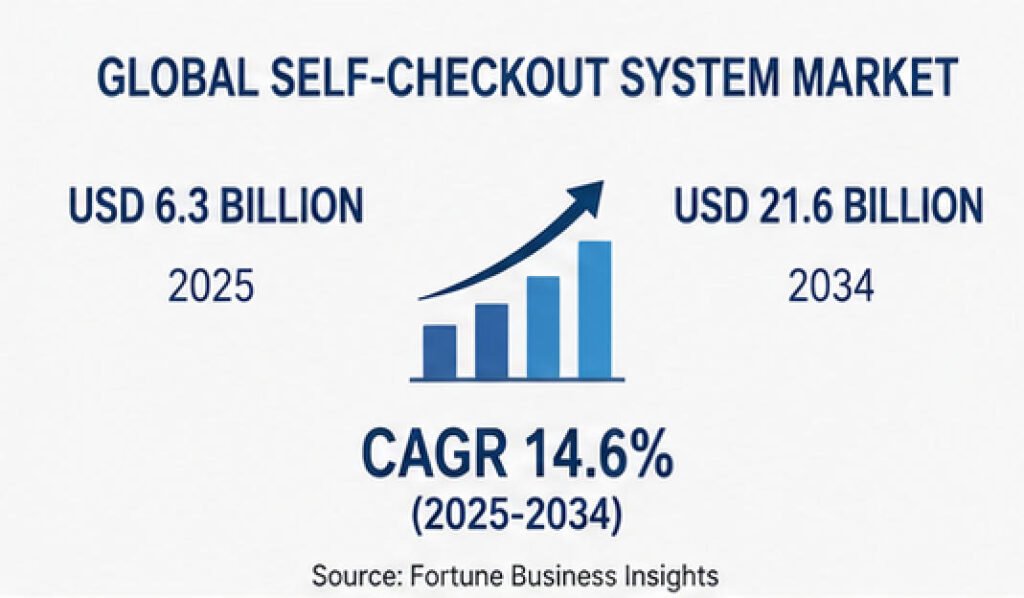
According to Fortune Business Insights, the global self-checkout system market was valued at USD 6.3 billion in 2025 and is projected to reach USD 21.6 billion by 2034, growing at a CAGR of approximately 14.6%.
This article explores how retail self-service kiosks are evolving, the technologies behind unattended stores, current market trends, and what retailers should consider before deploying next-generation self-service solutions.
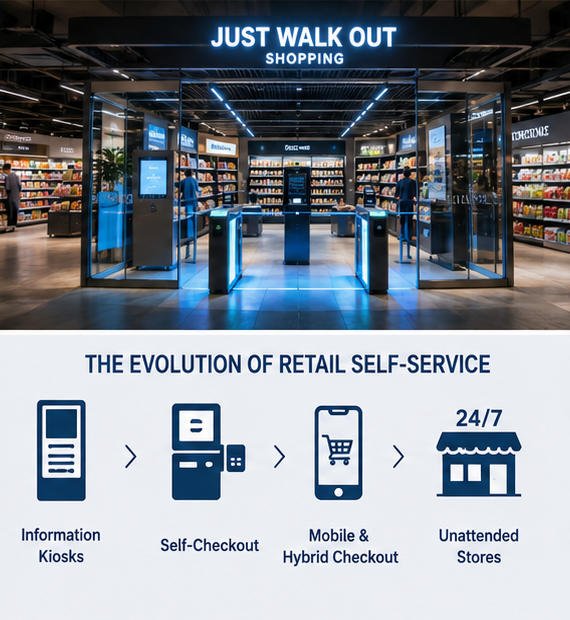
The Evolution of Retail Self-Service
Retail automation has developed in several stages over the past three decades.
Phase 1: Information Kiosks
Early kiosks provided:
- Product lookup
- Price checking
- Loyalty card enrollment
- Store navigation
- Digital catalogs
These systems mainly reduced employee workload while improving customer convenience.
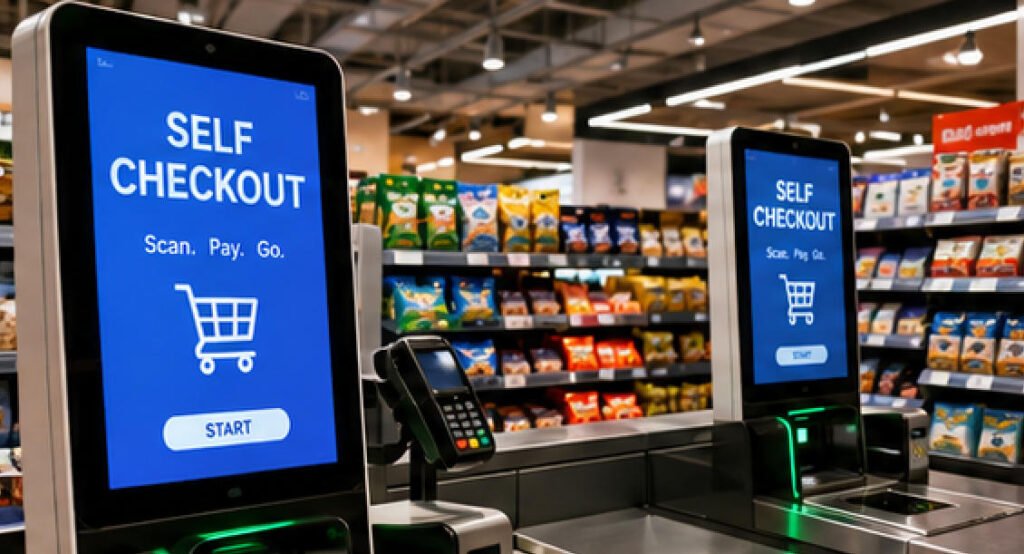
Phase 2: Self-Checkout
Self-checkout kiosks became mainstream in supermarkets and big-box retailers during the 2000s.
Customers could:
- Scan products
- Weigh produce
- Apply coupons
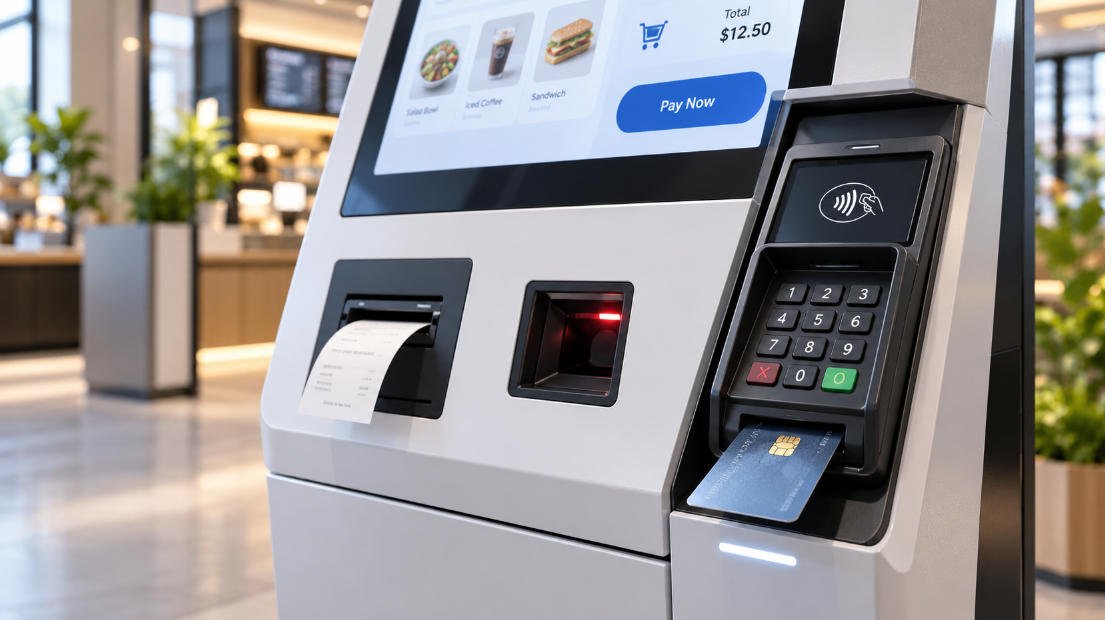
- Pay using cash or cards
- Print receipts
Retailers benefited through:
- Reduced labor costs
- Shorter checkout queues
- Higher throughput during peak hours
Today, self-checkout is common in:
- Grocery stores
- Convenience stores
- Pharmacies
- Electronics retailers
- Home improvement stores
- Department stores
Phase 3: Mobile & Hybrid Checkout
Retailers have expanded beyond fixed kiosks by introducing:
- Scan-and-go mobile apps
- RFID-based checkout
- Smart shopping carts
- Mobile POS
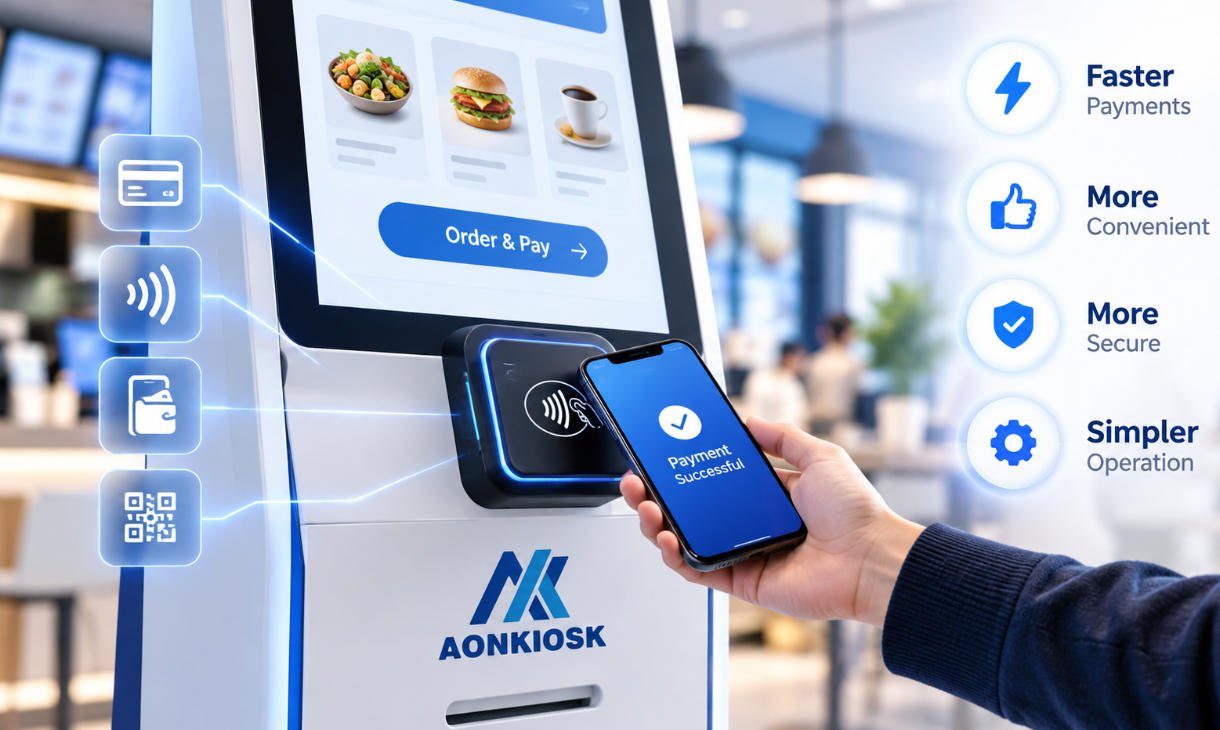
- Contactless payment terminals
This hybrid approach gives shoppers multiple checkout options based on basket size and store format.
Phase 4: Fully Unattended Retail
The newest generation removes the traditional checkout process almost entirely.
Instead of visiting a cashier, shoppers simply:
- Enter the store
- Select products
- Leave
Payment happens automatically through AI, computer vision, RFID, weight sensors, or mobile authentication.
Examples include:
- AI convenience stores
- Smart micro markets
- 24/7 unattended stores
- Automated campus stores
- Smart vending ecosystems
Why Retailers Are Investing in Self-Service Kiosks
Several long-term industry trends are accelerating adoption.
1. Labor Shortages
Retailers worldwide continue facing hiring challenges.
Self-service kiosks allow one employee to supervise multiple checkout stations instead of operating a single register.
Rather than replacing employees entirely, many retailers redeploy staff toward:
- Customer assistance
- Fresh food preparation
- Online order fulfillment
- Inventory management
2. Rising Labor Costs
Minimum wage increases and inflation have significantly raised operating expenses.
Automation helps retailers:
- Reduce repetitive tasks
- Improve productivity
- Lower long-term operational costs
3. Consumer Demand for Faster Checkout
Modern shoppers increasingly prioritize speed over traditional cashier interactions.
According to the 2025 NCR Voyix Commerce Experience Report, many consumers who rarely use self-checkout said they would be more likely to do so if stores improved the experience for larger shopping baskets, highlighting that convenience remains a key driver of adoption.
Consumers now expect:
- Minimal waiting
- Contactless payments
- Digital receipts
- Mobile wallet compatibility
- Faster shopping journeys
4. Digital Payment Growth
Cashless transactions continue expanding globally.
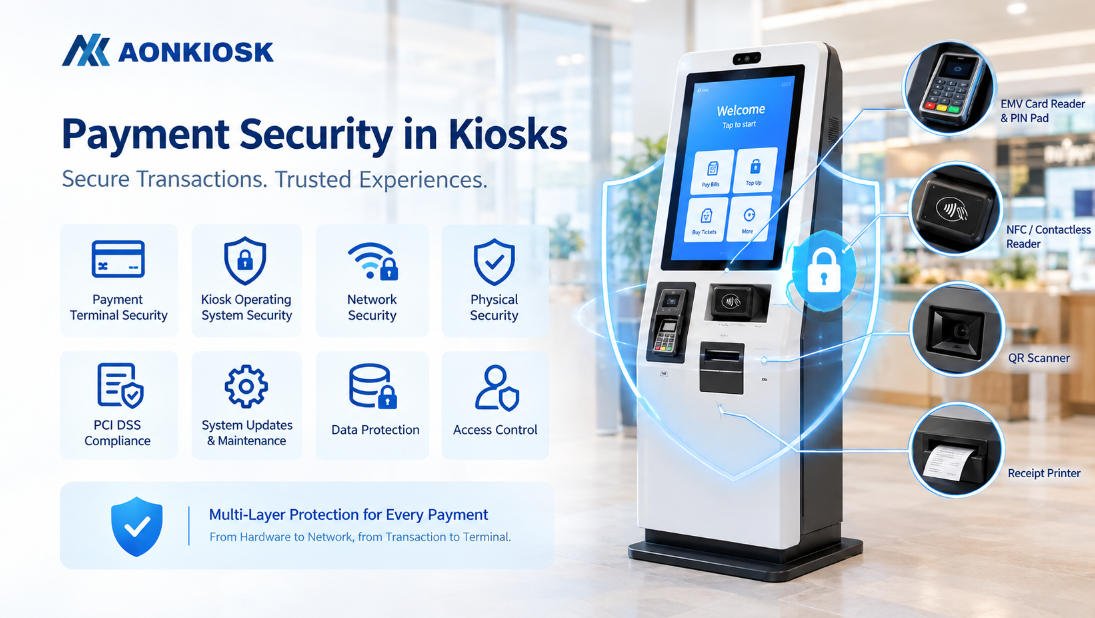
Self-service kiosks now commonly support:
- Credit cards
- EMV chip cards
- NFC
- Apple Pay
- Google Pay
- QR code payments
- Mobile wallets
- Buy Now Pay Later (BNPL)
Digital payment integration makes unattended retail commercially viable.
Technologies Powering Modern Self-Service Retail
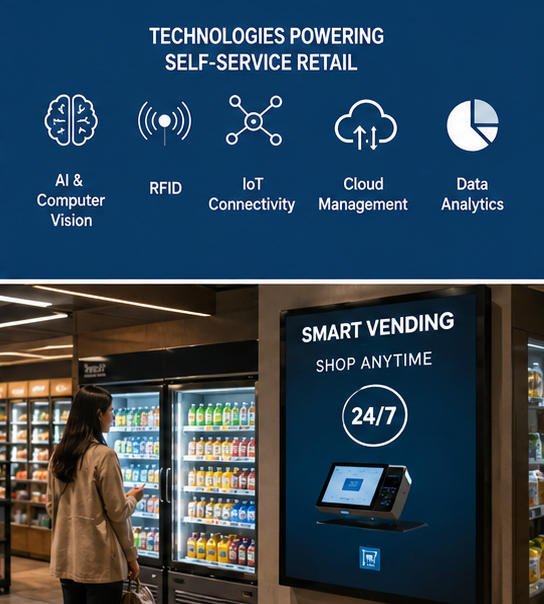
Today’s kiosks are significantly more intelligent than earlier generations.
AI Computer Vision
Artificial intelligence recognizes products without barcode scanning.
Benefits include:
- Faster checkout
- Fewer scanning errors
- Reduced shrinkage
- Improved user experience
RFID
RFID enables instant identification of multiple products.
Common applications include:
- Apparel retail
- Libraries
- Luxury goods
- Inventory tracking
IoT Connectivity
Connected kiosks continuously transmit operational data, allowing retailers to monitor:
- Device health
- Transaction volumes
- Inventory levels
- Payment status
- Remote diagnostics
Cloud-Based Management
Centralized cloud platforms allow chains to manage hundreds or thousands of kiosks remotely.
Capabilities include:
- Software updates
- Promotional content
- Price synchronization
- Device monitoring
- Security management
Data Analytics
Every transaction provides insights into customer behavior.
Retailers analyze:
- Peak shopping hours
- Basket size
- Conversion rates
- Product popularity
- Customer flow
These analytics support merchandising and operational optimization.
From Self-Checkout to Unattended Stores
The concept of unattended retail goes far beyond traditional self-checkout.
Instead of installing more kiosks, retailers redesign the entire shopping journey.
Typical unattended stores include:
- Smart convenience stores
- Office micro markets
- Hotel retail shops
- Airport retail
- Hospital convenience stores
- University campus stores
- Residential community stores
These locations often operate 24/7 without requiring full-time staff on site.
Benefits of Unattended Retail Stores
Lower Operating Costs
Automation reduces staffing requirements while extending operating hours.
Stores can remain open overnight without significantly increasing labor expenses.
Improved Customer Convenience
Customers appreciate:
- Faster shopping
- No checkout queues
- Contactless purchasing
- 24-hour availability
Better Space Utilization
Compact unattended stores can operate in locations unsuitable for traditional supermarkets, including:
- Apartment buildings
- Office towers
- Transit hubs
- Factories
- Hotels
Increased Sales Opportunities
Retailers can open additional micro locations with lower operating costs than full-service stores.
Challenges Retailers Must Address
Despite rapid adoption, unattended retail is not without challenges.
Retail Shrinkage
Theft remains one of the industry’s biggest concerns.
Retailers increasingly deploy:
- AI cameras
- Weight verification
- Computer vision
- Behavioral analytics
- Remote monitoring
to reduce losses while maintaining customer convenience. Industry surveys show that concerns about shrinkage continue to influence deployment strategies, encouraging investments in more intelligent loss-prevention technologies.
Customer Experience
Not every shopper prefers automation.
Older customers or those purchasing complex baskets may still value staffed checkout lanes.
Many successful retailers now adopt hybrid models combining:
- Traditional cashiers
- Self-checkout
- Mobile checkout
- Express lanes
System Reliability
Unattended retail depends on stable:
- Internet connectivity
- Payment systems
- AI recognition
- POS integration
- Inventory synchronization
Reliable hardware and remote maintenance are therefore essential.
Future Trends in Retail Self-Service
Several innovations are expected to define the next generation of retail automation.
AI-Powered Checkout
Computer vision will continue reducing barcode scanning while improving transaction accuracy.
Personalized Shopping
Self-service kiosks will increasingly integrate loyalty programs and AI recommendations to deliver personalized promotions.
Smart Inventory Integration
Real-time inventory updates will improve stock accuracy and support automated replenishment.
Omnichannel Retail
Future kiosks will seamlessly support:
- Buy Online Pickup In Store (BOPIS)
- Returns
- Endless aisle ordering
- Loyalty redemption
- Membership services
Autonomous Micro Stores
Retailers are expected to expand cashier-less stores in transportation hubs, campuses, offices, and residential communities, where smaller footprints and extended operating hours provide a strong business case.
Conclusion
Retail self-service kiosks have evolved from simple checkout terminals into intelligent retail infrastructure that supports automation across the entire customer journey.
Today’s retailers are no longer asking whether self-service technology should be adopted—they are determining which combination of self-checkout kiosks, AI-enabled checkout, smart vending, and unattended stores best aligns with their business model.
As artificial intelligence, cloud computing, IoT, and computer vision continue to mature, the distinction between traditional retail and autonomous retail will continue to blur. Businesses that invest in scalable, customer-centric self-service solutions today will be better positioned to meet the expectations of tomorrow’s shoppers while improving operational efficiency and profitability.
References
- Fortune Business Insights – Self-Checkout System Market Report: https://www.fortunebusinessinsights.com/self-checkout-system-market-106779
- NCR Voyix – 2025 Commerce Experience Report: https://www.ncrvoyix.com/dam/company/docs/2025_NCR_Voyix_Commerce_Experience_Report_Infographic.pdf
- National Retail Federation (NRF) – Retail Theft & Violence Report: https://nrf.com/research/the-impact-of-retail-theft-violence-2025
- Research and Markets – Self-checkout System Market (2025–2030): https://www.researchandmarkets.com