





Le secteur du commerce de détail traverse l'une de ses transformations opérationnelles les plus significatives depuis l'introduction du lecteur de codes-barres. Ce qui a commencé comme de simples terminaux d'auto-paiement a évolué vers un écosystème intelligent de bornes libre-service, de systèmes de caisse alimentés par l'IA, de distributeurs automatiques intelligents et de magasins de détail entièrement sans personnel.
Sous l'effet des pénuries de main-d'œuvre, de la hausse des coûts d'exploitation, de l'adoption des paiements numériques et de l'évolution des attentes des consommateurs, les détaillants du monde entier investissent massivement dans des technologies d'automatisation qui améliorent l'efficacité tout en enrichissant l'expérience d'achat.
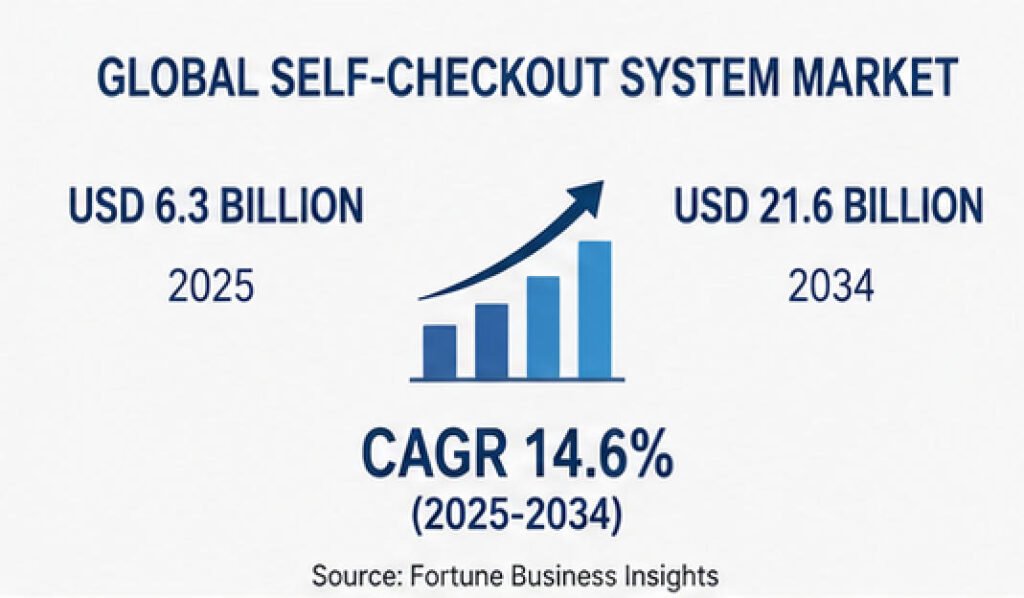
Selon Fortune Business Insights, le marché mondial des systèmes d'auto-paiement était évalué à 6,3 milliards USD en 2025 et devrait atteindre 21,6 milliards USD d'ici 2034, avec un taux de croissance annuel composé (TCAC) d'environ 14.6%.
Cet article explore l'évolution des bornes libre-service dans le commerce de détail, les technologies derrière les magasins sans personnel, les tendances actuelles du marché, ainsi que les éléments que les détaillants devraient considérer avant de déployer des solutions libre-service de nouvelle génération.
L'évolution du libre-service dans le commerce de détail
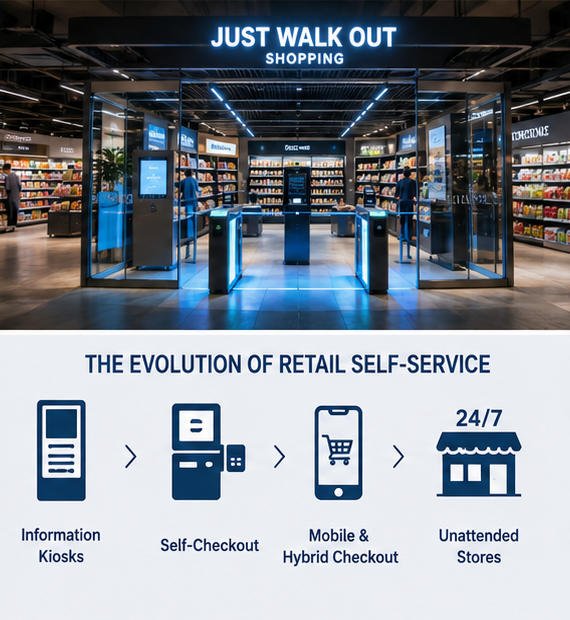
L'automatisation du commerce de détail s'est développée en plusieurs étapes au cours des trois dernières décennies.
Phase 1 : Bornes d'information
Les premières bornes offraient :
- La recherche de produits
- Vérification des prix
- L'inscription aux programmes de fidélité
- La navigation en magasin
- Les catalogues numériques
Ces systèmes réduisaient principalement la charge de travail des employés tout en améliorant le confort des clients.
Phase 2 : L'auto-paiement
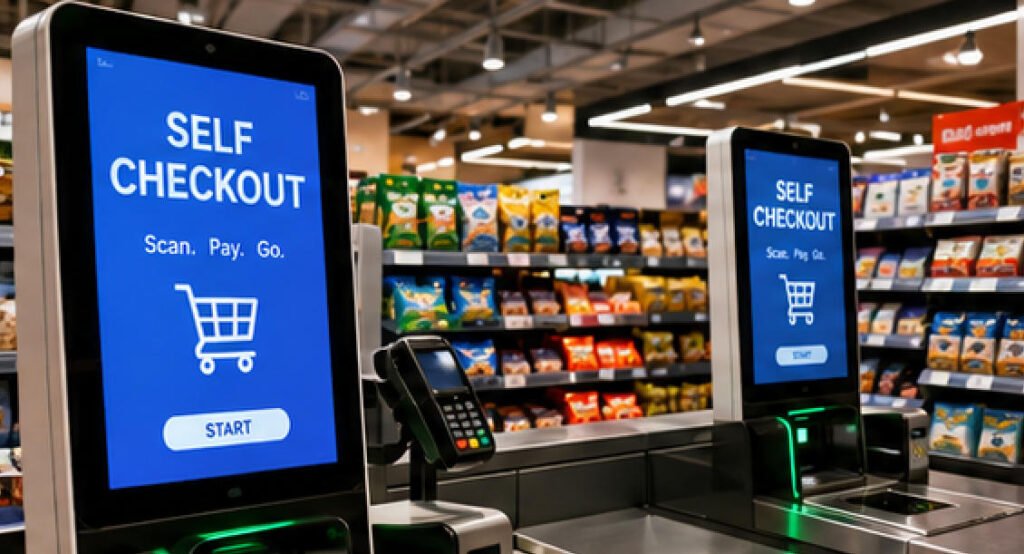
Les bornes d'auto-paiement sont devenues courantes dans les supermarchés et les grandes surfaces au cours des années 2000.
Les clients pouvaient :
- Scanner les produits
- Peser les fruits et légumes
- Appliquer des coupons
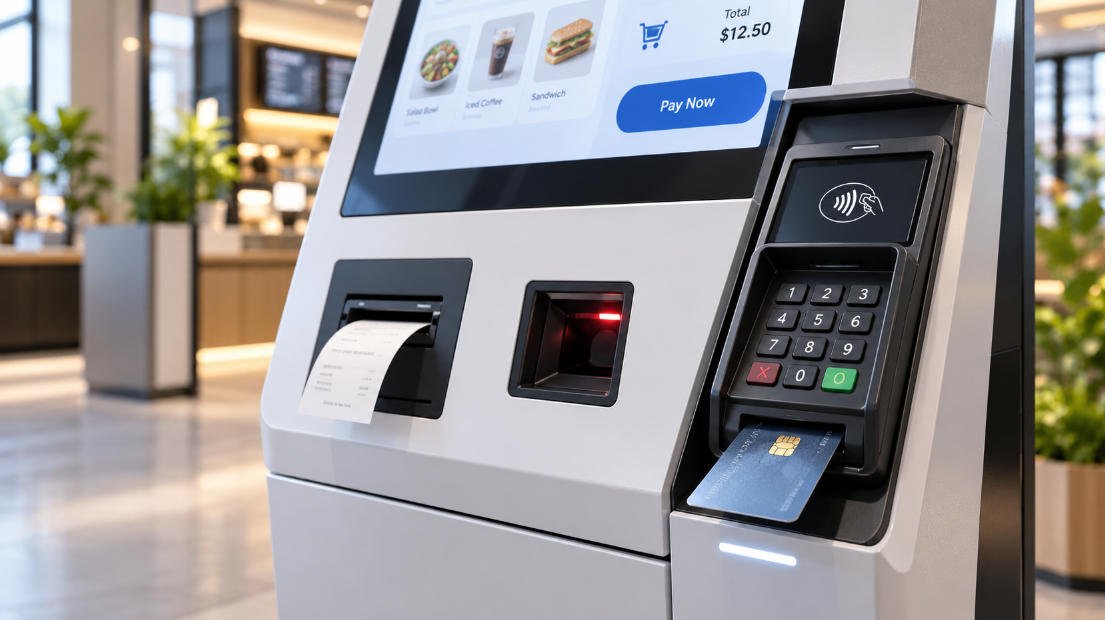
- Payer en espèces ou par carte
- Imprimer les reçus
Les détaillants en ont tiré des avantages tels que :
- Réduction des coûts de main-d'œuvre
- Des files d'attente plus courtes aux caisses
- Un débit plus élevé aux heures de pointe
Aujourd'hui, l'auto-paiement est courant dans :
- Supermarchés
- Magasins de proximité
- Pharmacies
- Détaillants d'électronique
- Les magasins de bricolage
- Grands magasins
Phase 3 : Paiement mobile et hybride
Les détaillants ont dépassé les bornes fixes en introduisant :
- Des applications mobiles de scan-and-go
- Le paiement par RFID
- Des chariots de courses intelligents
- Des terminaux de paiement mobiles (MPOS)
- Des terminaux de paiement sans contact
Cette approche hybride offre aux acheteurs plusieurs options de paiement selon la taille du panier et le format du magasin.
Phase 4 : Commerce de détail entièrement sans personnel
La nouvelle génération supprime presque entièrement le processus de caisse traditionnel.
Au lieu de passer par un caissier, les acheteurs n'ont qu'à :
- Entrer dans le magasin
- Sélectionner des produits
- En sortir
Le paiement s'effectue automatiquement grâce à l'IA, à la vision par ordinateur, à la RFID, aux capteurs de poids ou à l'authentification mobile.
Exemples :
- Magasins de proximité intelligents basés sur l'IA
- Micro-marchés intelligents
- Magasins sans personnel ouverts 24h/24 et 7j/7
- Magasins campus automatisés
- Écosystèmes de distributeurs automatiques intelligents
Pourquoi les détaillants investissent dans les bornes libre-service
Plusieurs tendances industrielles de long terme accélèrent leur adoption.
1. Pénurie de main-d'œuvre
Les détaillants du monde entier continuent de faire face à des difficultés de recrutement.
Les bornes libre-service permettent à un seul employé de superviser plusieurs postes de caisse au lieu d'opérer une seule caisse enregistreuse.
Plutôt que de remplacer entièrement les employés, de nombreux détaillants réaffectent leur personnel vers :
- L'assistance client
- La préparation de produits frais
- Le traitement des commandes en ligne
- Gestion des stocks
2. Coûts de main-d'œuvre en hausse
Les hausses du salaire minimum et l'inflation ont considérablement augmenté les dépenses d'exploitation.
L'automatisation aide les détaillants à :
- Réduire les tâches répétitives
- Améliorer la productivité
- Réduire les coûts opérationnels à long terme
3. Demande des consommateurs pour un passage en caisse plus rapide
Les acheteurs modernes privilégient de plus en plus la rapidité au détriment des interactions traditionnelles avec le caissier.
Selon la Rapport sur l'expérience commerciale NCR Voyix 2025, de nombreux consommateurs qui utilisent rarement le libre-service ont déclaré qu'ils seraient plus enclins à l'utiliser si les magasins amélioraient l'expérience pour les grands paniers d'achat, soulignant que la commodité reste un facteur clé d'adoption.
Les consommateurs s'attendent désormais à :
- Une attente minimale
- Des paiements sans contact
- Reçus numériques
- La compatibilité avec les portefeuilles mobiles
- Des parcours d'achat plus rapides
4. Croissance des paiements numériques
Les transactions sans espèces continuent de se développer à l'échelle mondiale.
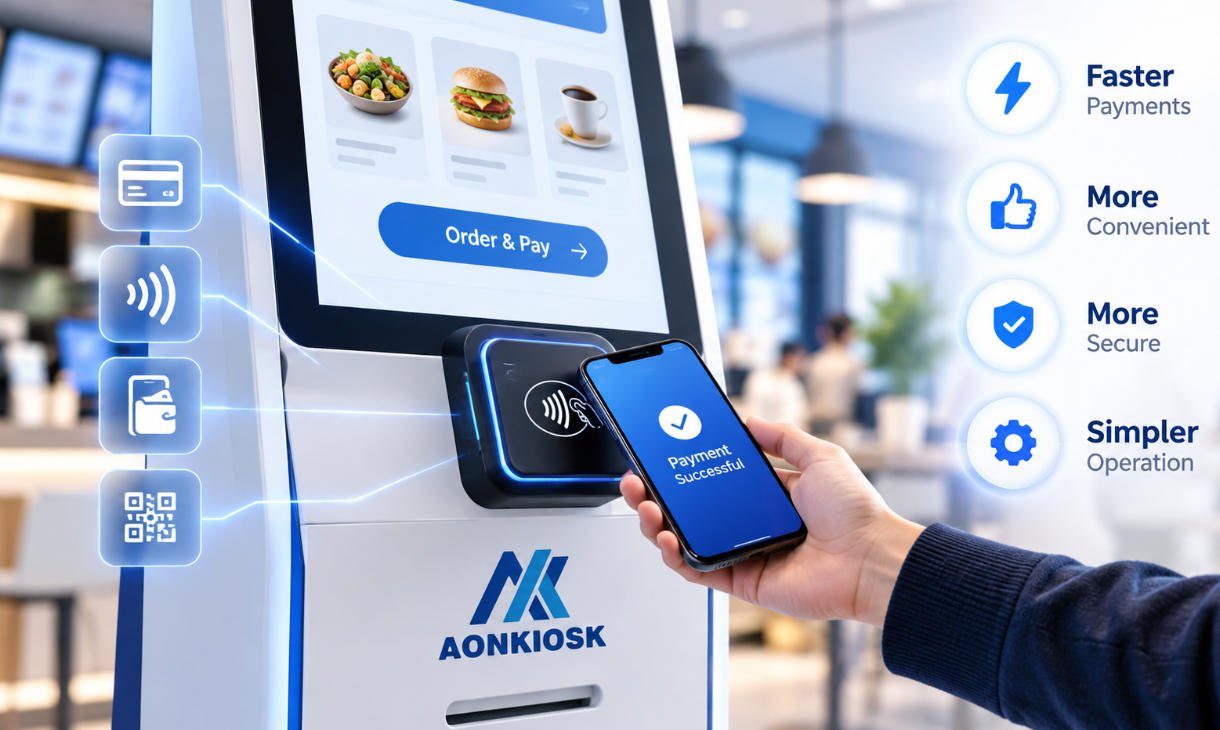
Les bornes libre-service prennent désormais couramment en charge :
- Cartes de crédit
- Les cartes à puce EMV
- NFC
- Apple Pay
- Google Pay
- Paiements par code QR
- Portefeuilles mobiles
- L'achat immédiat avec paiement différé (BNPL)
L'intégration des paiements numériques rend le commerce sans personnel commercialement viable.
Technologies alimentant le commerce de détail moderne en libre-service
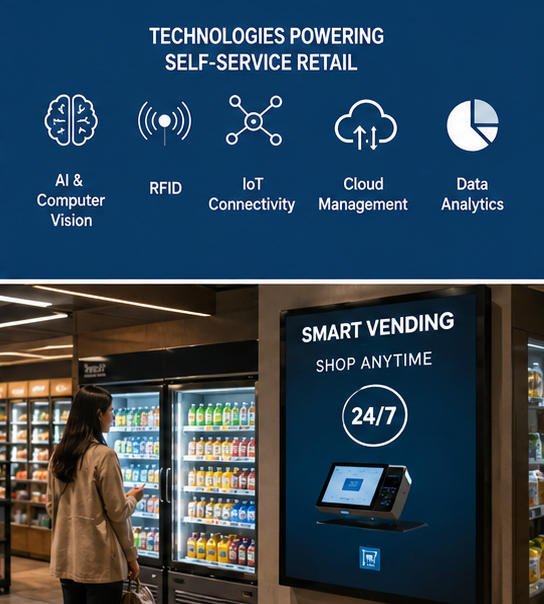
Les bornes actuelles sont considérablement plus intelligentes que les générations précédentes.
Vision par ordinateur basée sur l'IA
L'intelligence artificielle reconnaît les produits sans nécessiter de scan de code-barres.
Les avantages incluent :
- Passage en caisse plus rapide
- Moins d'erreurs de scan
- Réduction de la démarque inconnue
- Expérience utilisateur améliorée
RFID
La RFID permet l'identification instantanée de multiples produits.
Les applications courantes incluent :
- Commerce de détail d'habillement
- Bibliothèques
- Produits de luxe
- Suivi des stocks
Connectivité IoT
Les bornes connectées transmettent en continu des données opérationnelles, permettant aux détaillants de surveiller :
- L'état des appareils
- Les volumes de transactions
- Niveaux de stock
- Le statut des paiements
- Un diagnostic à distance
Gestion basée sur le cloud
Les plateformes cloud centralisées permettent aux chaînes de gérer à distance des centaines, voire des milliers de bornes.
Les capacités incluent :
- Les mises à jour logicielles
- Le contenu promotionnel
- La synchronisation des prix
- Surveillance des appareils
- La gestion de la sécurité
L'analyse des données
Chaque transaction fournit des informations précieuses sur le comportement des clients.
Les détaillants analysent :
- Les heures de pointe des achats
- La taille du panier
- Les taux de conversion
- La popularité des produits
- Le flux client
Ces analyses soutiennent l'optimisation du merchandising et des opérations.
De l'auto-caisse aux magasins sans personnel
Le concept du commerce de détail sans personnel va bien au-delà de l'auto-caisse traditionnelle.
Au lieu d'installer davantage de bornes, les détaillants repensent l'intégralité du parcours d'achat.
Les magasins sans personnel typiques comprennent :
- Les magasins de proximité intelligents
- Les micro-marchés de bureau
- Les boutiques de vente au détail en hôtellerie
- Le commerce de détail en aéroport
- Les magasins de proximité en milieu hospitalier
- Les boutiques sur les campus universitaires
- Les magasins de proximité en zones résidentielles
Ces emplacements fonctionnent souvent 24h/24 et 7j/7 sans nécessiter de personnel à temps plein sur site.
Avantages des magasins de détail sans personnel
Coûts d'exploitation réduits
L'automatisation réduit les besoins en personnel tout en prolongeant les heures d'ouverture.
Les magasins peuvent rester ouverts toute la nuit sans augmenter significativement les dépenses de main-d'œuvre.
Amélioration du confort client
Les clients apprécient :
- Des achats plus rapides
- L'absence de files d'attente en caisse
- L'achat sans contact
- La disponibilité 24h/24
Meilleure utilisation de l'espace
Les magasins compacts sans personnel peuvent fonctionner dans des emplacements inadaptés aux supermarchés traditionnels, notamment :
- Les immeubles résidentiels
- Les tours de bureaux
- Les pôles de transport
- Les usines
- Hôtels
Opportunités de vente accrues
Les détaillants peuvent ouvrir des micro-emplacements supplémentaires avec des coûts d'exploitation inférieurs à ceux des magasins à service complet.
Défis que les détaillants doivent relever
Malgré une adoption rapide, le commerce de détail sans personnel n'est pas sans défis.
Perte de marchandises
Le vol demeure l'une des plus grandes préoccupations du secteur.
Les détaillants déploient de plus en plus :
- Des caméras à intelligence artificielle
- La vérification du poids
- La vision par ordinateur
- L'analyse comportementale
- Surveillance à distance
afin de réduire les pertes tout en préservant le confort client. Les enquêtes sectorielles montrent que les préoccupations liées à la perte de marchandises continuent d'influencer les stratégies de déploiement, encourageant les investissements dans des technologies de prévention des pertes plus intelligentes.
Expérience client
Tous les consommateurs ne préfèrent pas l'automatisation.
Les clients plus âgés ou ceux qui achètent des paniers complexes peuvent encore privilégier les caisses avec personnel.
De nombreux détaillants prospères adoptent désormais des modèles hybrides combinant :
- Les caissiers traditionnels
- Le paiement en libre-service
- Paiement mobile en caisse
- Caisses express
Fiabilité du système
Le commerce sans personnel dépend de la stabilité de :
- Connectivité Internet
- Systèmes de paiement
- Reconnaissance par IA
- Intégration POS
- La synchronisation des stocks
Un matériel fiable et une maintenance à distance sont donc essentiels.
Tendances futures du libre-service en commerce de détail
Plusieurs innovations devraient définir la prochaine génération d’automatisation du commerce de détail.
Caisse assistée par IA
La vision par ordinateur continuera de réduire le recours au scan de codes-barres tout en améliorant la précision des transactions.
Shopping personnalisé
Les bornes libre-service intégreront de plus en plus les programmes de fidélité et les recommandations par IA afin de proposer des promotions personnalisées.
Intégration intelligente des stocks
Les mises à jour des stocks en temps réel amélioreront la précision des inventaires et soutiendront le réapprovisionnement automatisé.
Commerce omnicanal
Les futures bornes prendront en charge de manière fluide :
- Achat en ligne, retrait en magasin (BOPIS)
- Retours
- Les commandes en rayon illimité
- Échange de points de fidélité
- Les services d'adhésion
Micro-magasins autonomes
Les détaillants devraient étendre les magasins sans caissier dans les hubs de transport, les campus, les bureaux et les communautés résidentielles, où une empreinte réduite et des horaires prolongés constituent un modèle économique solide.
Conclusion
Les bornes libre-service en commerce de détail ont évolué de simples terminaux de caisse vers une infrastructure de vente intelligente qui soutient l’automatisation sur l’ensemble du parcours client.
Les détaillants d’aujourd’hui ne se demandent plus si la technologie libre-service doit être adoptée — ils déterminent quelle combinaison de caisses libre-service, de caisses assistées par IA, de distributeurs intelligents et de magasins sans personnel correspond le mieux à leur modèle économique.
À mesure que l’intelligence artificielle, le cloud computing, l’IoT et la vision par ordinateur continuent de mûrir, la distinction entre le commerce de détail traditionnel et le commerce autonome continuera de s’estomper. Les entreprises qui investissent aujourd’hui dans des solutions libre-service évolutives et centrées sur le client seront mieux positionnées pour répondre aux attentes des consommateurs de demain tout en améliorant leur efficacité opérationnelle et leur rentabilité.
Références
- Fortune Business Insights – Rapport sur le marché des systèmes de caisse libre-service : https://www.fortunebusinessinsights.com/self-checkout-system-market-106779
- NCR Voyix – Rapport sur l’expérience commerciale 2025 : https://www.ncrvoyix.com/dam/company/docs/2025_NCR_Voyix_Commerce_Experience_Report_Infographic.pdf
- National Retail Federation (NRF) – Rapport sur le vol et la violence dans le commerce de détail : https://nrf.com/research/the-impact-of-retail-theft-violence-2025
- Research and Markets – Marché des systèmes de caisse libre-service (2025–2030) : https://www.researchandmarkets.com