





The restaurant industry has changed dramatically over the past decade. Rising labor costs, increasing customer expectations, and rapid advances in digital technology have encouraged restaurants to rethink how they serve guests.
One of the biggest changes is the adoption of self ordering kiosks. From quick-service restaurants (QSRs) to cafés, food courts, and casual dining chains, businesses are replacing or supplementing traditional waiter service with automated ordering systems.
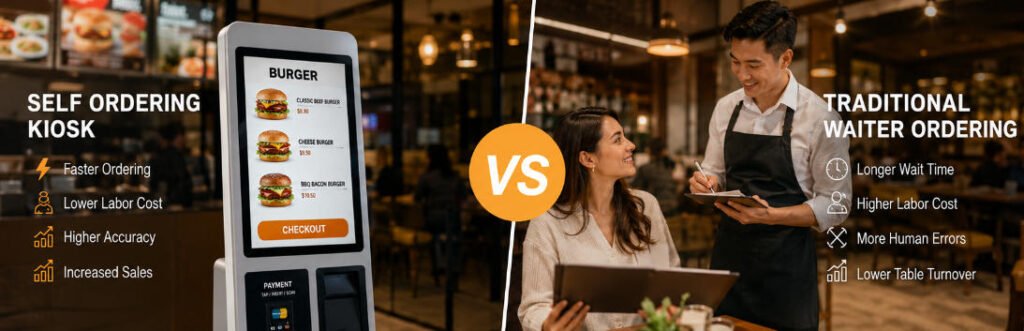
But is a self ordering kiosk truly better than traditional waiter ordering? This guide compares both approaches in terms of speed, operating costs, customer satisfaction, and overall efficiency to help restaurant owners make an informed investment decision.
What Is Traditional Waiter Ordering?
Traditional waiter ordering relies on staff members to greet customers, explain the menu, record orders, communicate with the kitchen, deliver food, and process payments.
This model emphasizes personal interaction and hospitality. It works particularly well in fine dining, luxury restaurants, and venues where personalized service is part of the brand experience.
However, this approach also depends heavily on staff availability, training, and operational consistency.
What Is a Self Ordering Kiosk?
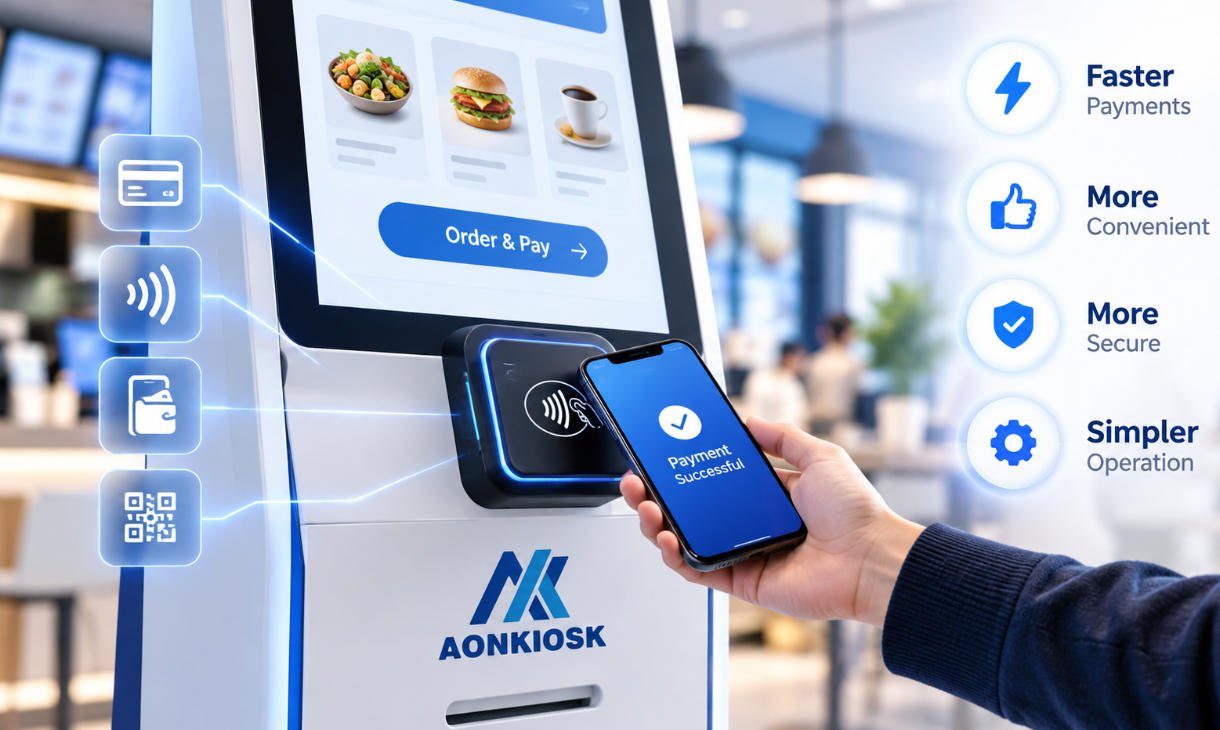
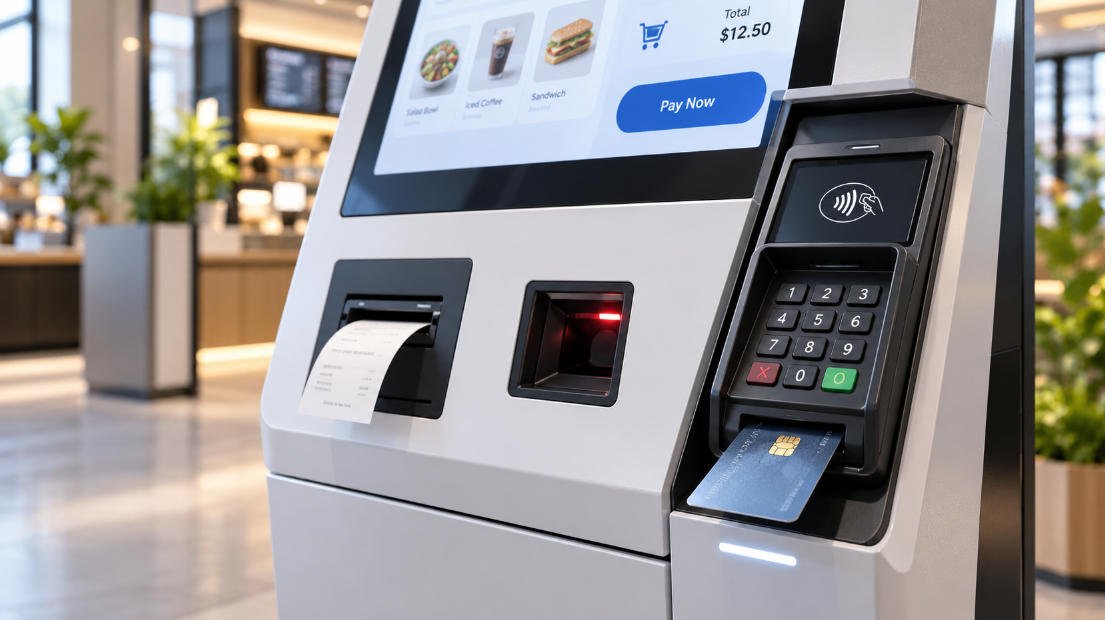
A self ordering kiosk is an interactive touchscreen terminal that allows customers to browse menus, customize meals, place orders, and complete payments independently without waiting for restaurant staff.
Modern kiosks can integrate with:
- POS systems
- Kitchen Display Systems (KDS)
- Online ordering platforms
- Loyalty programs
- QR ordering
- Contactless payment
- Membership systems
For many restaurants, kiosks do not replace employees entirely—they automate repetitive tasks while allowing staff to focus on food preparation and customer service.
Speed Comparison
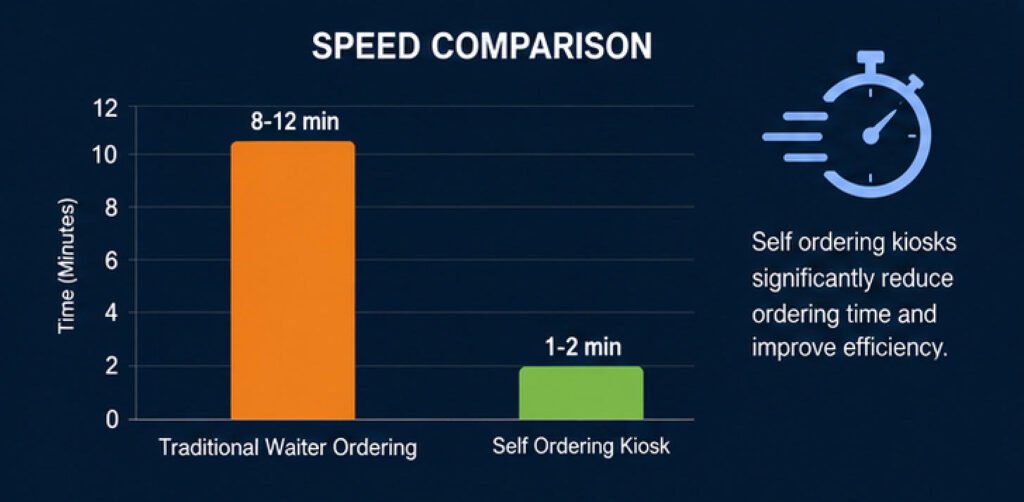
One of the biggest advantages of a kiosk vs waiter ordering model is speed.
Traditional Waiter Ordering
A typical dining process includes:
- Waiting to be seated
- Waiting for a waiter
- Taking orders manually
- Returning to POS
- Entering orders
- Processing payment
During busy periods, customers may spend several minutes simply waiting for assistance.
Self Ordering Kiosk
With a kiosk:
- Customers start ordering immediately.
- Menu browsing is self-paced.
- Orders go directly to the kitchen.
- Payment is completed during ordering.
No waiting for available staff.
Average Ordering Time
| Process | Waiter Ordering | Self Ordering Kiosk |
|---|---|---|
| Waiting to Order | 3–10 min | 0–2 min |
| Order Entry | Manual | Automatic |
| Payment | After meal | During ordering |
| Kitchen Notification | Delayed | Instant |
For high-volume restaurants, reducing even a few minutes per customer can significantly increase table turnover and daily sales.
Cost Comparison
Labor is often the largest operating expense for restaurants.
Traditional waiter service requires:
- More front-of-house staff
- Ongoing recruitment
- Employee training
- Shift management
- Payroll taxes
- Benefits
- Overtime costs
A self ordering kiosk requires a higher initial investment but significantly lowers long-term labor expenses.
Example Cost Analysis
Suppose a restaurant employs:
- 4 waiters
- Average salary: $3,000/month
Annual labor cost:
4 × $3,000 × 12 = $144,000
Installing several self ordering kiosks may allow the restaurant to reduce staffing needs while reallocating employees to food preparation and customer support.
Many operators recover kiosk investments within 12–24 months, depending on transaction volume.
Customer Experience Comparison
Customer expectations have evolved. Many diners now prefer fast, independent ordering.
Advantages of Traditional Waiter Service
- Personalized recommendations
- Human interaction
- Better for premium dining
- Easier handling of complex requests
Traditional service remains ideal for upscale restaurants where hospitality is a key part of the experience.
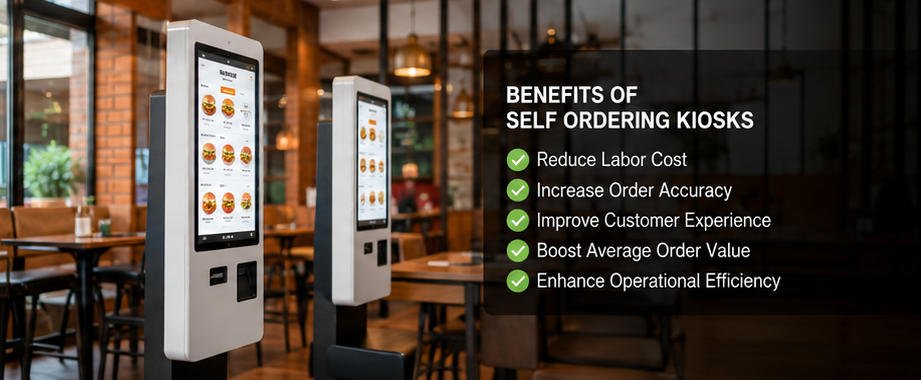
Advantages of Self Ordering Kiosks
No Waiting
Customers can order immediately after entering the restaurant.
Better Order Accuracy
Guests select menu items themselves, reducing communication errors between customers and staff.
Easy Customization
Customers can easily:
- Remove ingredients
- Add toppings
- Choose meal sizes
- Select combo upgrades
- View allergen information
Multilingual Support
Restaurants serving international customers can provide multiple language options with a single interface.
Contactless Experience
Many guests prefer minimal physical interaction, especially for quick meals.
Efficiency Analysis
Restaurant efficiency depends on how smoothly orders move from customers to the kitchen.
Self ordering kiosks streamline the entire workflow.
Traditional Workflow
Customer – Waiter – POS – Kitchen – Waiter – Customer
Each additional step introduces opportunities for delays or mistakes.
Kiosk Workflow
Customer – Self Ordering Kiosk – Kitchen Display System – Kitchen – Customer
The simplified process improves operational efficiency while reducing manual work.
Upselling Performance
Another significant difference in the restaurant automation comparison is upselling.
Waiters may forget or hesitate to recommend additional items.
A kiosk consistently presents:
- Combo meals
- Desserts
- Drinks
- Side dishes
- Premium upgrades
- Limited-time offers
Because every customer sees these suggestions, restaurants often experience higher average order values.
Many quick-service restaurants report average order value increases of 10–30% after implementing digital ordering systems, depending on menu design and upselling strategy.
Order Accuracy
Manual ordering errors may occur because of:
- Miscommunication
- Handwriting issues
- POS entry mistakes
- Language barriers
- Busy restaurant environments
Self ordering kiosks eliminate many of these issues because customers directly confirm every order before payment.
Improved accuracy reduces:
- Food waste
- Refunds
- Customer complaints
- Kitchen remakes
Staff Productivity
Contrary to popular belief, kiosks do not eliminate staff—they help employees become more productive.
Instead of repeatedly taking orders, restaurant employees can focus on:
- Food quality
- Customer assistance
- Dining room cleanliness
- Faster table service
- Delivery coordination
This leads to better customer experiences while improving overall operational efficiency.
Which Restaurants Benefit Most from Self Ordering Kiosks?
Self ordering kiosks deliver the greatest return for:
- Quick Service Restaurants (QSR)
- Fast Casual Restaurants
- Bubble Tea Shops
- Coffee Chains
- Food Courts
- Pizza Restaurants
- Burger Chains
- Fried Chicken Restaurants
- Convenience Stores
- Campus Dining
- Airport Restaurants
- Hospital Cafeterias
Restaurants with high customer volume and standardized menus typically achieve the fastest ROI.
When Traditional Waiter Ordering Still Makes Sense
Traditional waiter service remains valuable for businesses where hospitality is central to the dining experience, including:
- Fine dining restaurants
- Luxury hotels
- High-end steakhouses
- Wine restaurants
- Private dining venues
- Chef’s tasting restaurants
Many premium establishments also adopt a hybrid model, using kiosks for reservations, check-in, or payment while preserving full table service.
Hybrid Restaurant Model: The Best of Both Worlds
Rather than choosing one method exclusively, many restaurants combine self ordering kiosks with waiter service.
For example:
- Customers place orders using kiosks.
- Staff deliver food and provide assistance.
- Waiters focus on hospitality instead of repetitive order taking.
- Managers optimize labor scheduling while maintaining service quality.
This hybrid approach balances automation with personalized customer care.
Why More Restaurants Are Choosing Self Ordering Kiosks
Restaurants worldwide are embracing digital ordering because it delivers measurable operational improvements:
- Faster ordering process
- Reduced labor costs
- Higher order accuracy
- Improved customer satisfaction
- Increased average order value through intelligent upselling
- Better integration with POS and kitchen systems
- Scalable operations during peak hours
For businesses facing labor shortages or looking to improve profitability, self ordering kiosks have become a strategic investment rather than simply a technology upgrade.
Conclusion
When comparing self ordering kiosk vs traditional waiter ordering, there is no one-size-fits-all solution. Traditional waiter service continues to excel in fine dining and personalized hospitality, while self ordering kiosks provide unmatched speed, efficiency, and cost savings for high-volume restaurants.
For quick-service and fast-casual businesses, adopting self-service technology can shorten wait times, reduce operational expenses, improve order accuracy, and create new opportunities for upselling. Many successful restaurants now combine both models, using kiosks to automate routine transactions while allowing staff to focus on delivering exceptional customer service.
As restaurant automation continues to evolve, investing in a reliable self ordering kiosk solution can help businesses stay competitive, enhance customer experiences, and build a more efficient operation.