





Pour les restaurants opérant sur un marché concurrentiel, améliorer les revenus ne consiste plus seulement à attirer davantage de clients : il est tout aussi important de maximiser la valeur de chaque transaction.
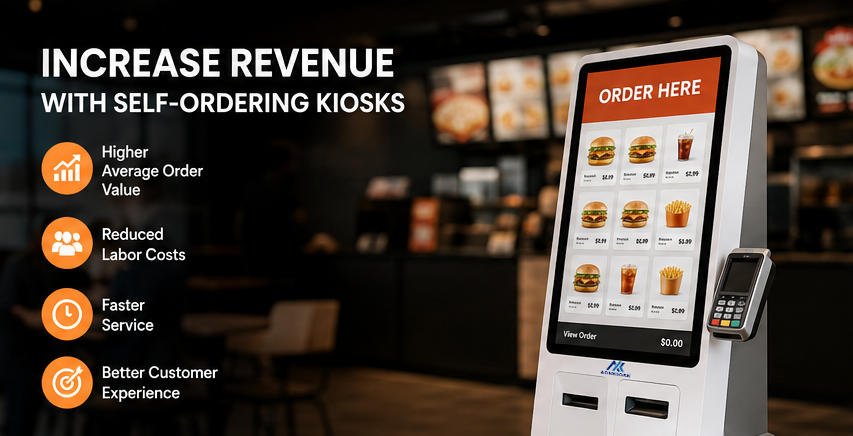
Les pénuries de main-d’œuvre, la hausse des coûts d’exploitation et l’évolution des attentes des consommateurs ont accéléré l’adoption des bornes de commande libre-service dans le monde entier. Ce qui a commencé comme une fonctionnalité de confort est devenu l’une des technologies génératrices de revenus les plus efficaces du secteur de la restauration.
Modernes bornes de commande libre-service Ces bornes font bien plus que remplacer les caissiers. Elles recommandent intelligemment des suppléments, encouragent les améliorations de repas, éliminent les erreurs de commande, réduisent les temps d’attente et permettent aux restaurants de servir davantage de clients pendant les heures de pointe.
Cet article explique comment les bornes de restaurant augmentent les ventes, explore les statistiques de vente incitative des bornes, analyse des mises en œuvre réelles et démontre comment les restaurants calculent le retour sur investissement (ROI) du déploiement de systèmes de bornes de commande libre-service.
Pourquoi les restaurants investissent dans les bornes de commande libre-service
Les restaurants sont confrontés à plusieurs défis persistants :
- Hausse des dépenses de main-d’œuvre
- Attentes croissantes des clients en matière de rapidité
- Exigences accrues de précision des commandes
- Demande croissante de commandes sans contact
- Pression pour augmenter le montant moyen du ticket
Contrairement au service de caisse traditionnel, les bornes de commande libre-service permettent aux clients de parcourir les menus sans se sentir pressés, ce qui conduit à des décisions d’achat plus réfléchies.
De nombreux exploitants de restaurants constatent que les bornes réduisent non seulement la dépendance à la main-d’œuvre, mais augmentent également de manière constante la valeur moyenne des commandes.
Comment les bornes de commande libre-service augmentent les revenus des restaurants
Les revenus des restaurants augmentent par plusieurs canaux simultanément, et non par une seule amélioration.
1. Valeur moyenne des commandes plus élevée
Le principal moteur de revenus provient de l’augmentation du montant dépensé par chaque client.
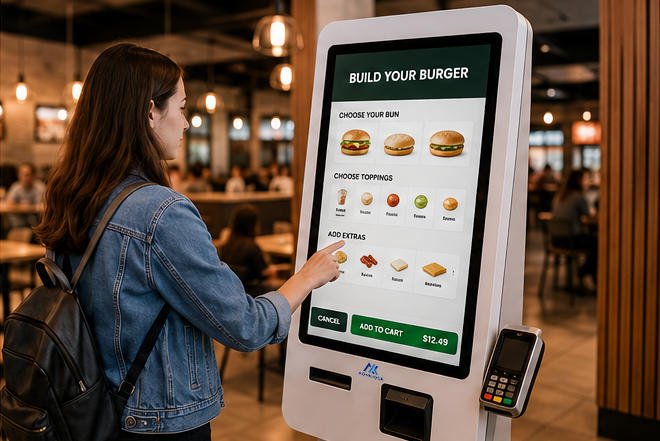
Contrairement aux caissiers humains, les bornes recommandent systématiquement :
- Des améliorations de repas
- Des offres combinées
- Des garnitures premium
- Des boissons supplémentaires
- Des desserts
- Des accompagnements
Étant donné que ces suggestions sont automatisées et personnalisées, chaque client bénéficie de la même opportunité de vente.
Exemple :
Commande du client :
- Cheeseburger ($8)
La borne recommande :
- Passage au menu combo (+$4)
- Grandes frites (+$1)
- Fromage supplémentaire (+$1)
- Milkshake (+$4)
Une commande potentielle de $8 devient un achat de $18.
C’est l’une des principales raisons pour lesquelles les restaurants signalent des augmentations significatives de la valeur moyenne des tickets après le déploiement de bornes de commande libre-service.
2. Vente incitative cohérente sans variabilité des employés
Les caissiers humains négligent souvent la vente incitative parce qu’ils sont :
- Occupés
- Fatigués
- Sous pression
- Inexpérimentés
- Concentrés sur la réduction des temps d’attente
Les bornes de commande libre-service n’oublient jamais de recommander des produits.
Chaque transaction suit une logique de vente prédéfinie.
Les règles typiques de vente incitative incluent :
- Recommander des boissons après les burgers
- Proposer des desserts après les repas
- Suggérer des portions plus grandes
- Recommander des repas familiaux
- Afficher des promotions limitées dans le temps
- Promouvoir des produits à forte marge
Cette cohérence crée une croissance prévisible des revenus.
La psychologie derrière la vente incitative des bornes
Contrairement aux interactions en face à face, les clients ressentent souvent moins de pression lorsqu’ils commandent sur un écran.
Ils ont le temps de :
- Parcourir l’intégralité du menu
- Comparer les prix
- Lire les descriptions
- Voir les photos des produits
- Personnaliser les repas
Cet environnement d'achat détendu encourage des dépenses supplémentaires.
Le merchandising visuel joue également un rôle majeur.
Une photographie culinaire de haute qualité augmente considérablement l'intention d'achat par rapport aux menus uniquement textuels.
Les restaurants peuvent placer stratégiquement des articles rentables tout au long du parcours de commande.
Statistiques de vente incitative des bornes
De nombreuses études sectorielles ont démontré des améliorations mesurables après l'installation de bornes de commande libre-service.
Les résultats couramment rapportés incluent :
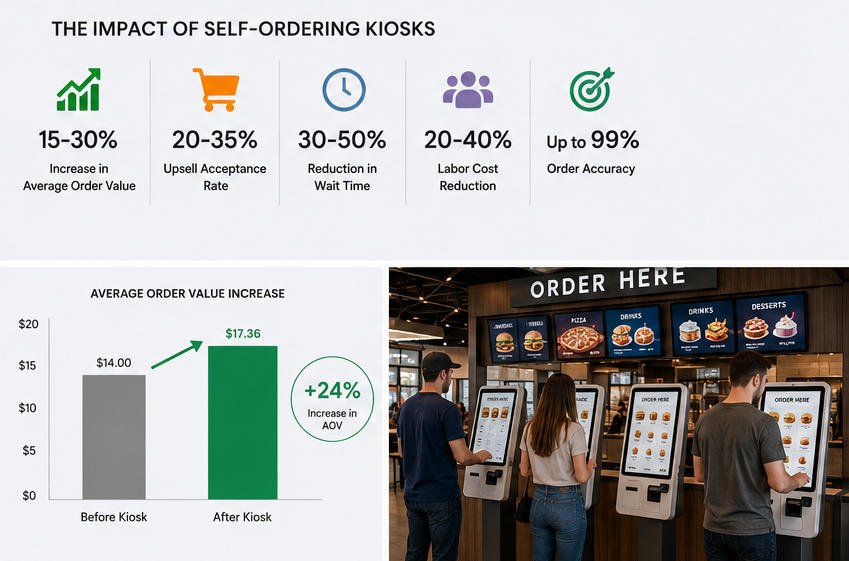
| Indicateur | Amélioration typique |
|---|---|
| Valeur moyenne des commandes | 15–30% |
| Taux d'acceptation des ventes incitatives | 20–35% |
| Précision des commandes | Jusqu'à 99 % |
| Réduction des coûts de main-d'œuvre | 20–40% |
| Temps d'attente client | Réduit de 30 à 50 % |
| Rapidité de commande | Augmentée de 25 à 40 % |
Bien que les résultats varient selon le type de restaurant, la conception du menu et le logiciel des bornes, de nombreux restaurants de restauration rapide constatent systématiquement une augmentation des revenus après le déploiement des bornes.
La combinaison de valeurs de commande plus élevées et d'une efficacité opérationnelle améliorée fait des bornes l'un des investissements technologiques au retour sur investissement le plus rapide dans la restauration moderne.
Mécanismes intelligents de vente incitative utilisés par les bornes de restaurant
Recommandations de repas combinés
Au lieu d'acheter des articles individuels au menu, les clients reçoivent des suggestions de combinaisons de repas complètes.
Exemple :
“ Passez au combo et économisez 1 €. ”
Les combinaisons augmentent à la fois la satisfaction client et les revenus du restaurant.
Suppléments premium
Les clients peuvent facilement personnaliser leurs repas en ajoutant :
- Bacon
- Fromage
- Avocat
- Viande supplémentaire
- Sauces premium
La personnalisation devient simple grâce à la sélection sur écran tactile.
Promotions limitées dans le temps
Les bornes numériques peuvent promouvoir instantanément :
- Produits saisonniers
- Nouveaux articles au menu
- Offres spéciales pour les fêtes
- Offres de l'heure heureuse
Contrairement aux menus imprimés, les promotions peuvent être mises à jour en quelques minutes.
Vente croisée intelligente
En fonction du comportement de commande, les bornes recommandent des produits complémentaires.
Exemples :
Burger → Frites
Pizza → Boissons gazeuses
Café → Pâtisseries
Salade → Soupe
La vente croisée augmente naturellement la taille du panier.
Recommandations visuelles de produits
La photographie culinaire influence considérablement le comportement d'achat.
Les clients sont plus susceptibles d'acheter des produits lorsqu'ils voient :
- Images haute résolution
- Points forts du menu animés
- Comparaisons de combinaisons
- Bannières promotionnelles
Les menus numériques surpassent les menus imprimés statiques pour encourager les achats impulsifs.
Un service plus rapide signifie plus de revenus quotidiens
La croissance des revenus ne provient pas uniquement de commandes plus importantes.
Elle provient également du service à un plus grand nombre de clients.
Les bornes de commande libre-service réduisent les goulots d'étranglement car plusieurs clients peuvent passer commande simultanément.
Les avantages incluent :
- Des files d’attente plus courtes
- Rotation des tables plus rapide
- Débit accru
- Meilleure performance aux heures de pointe
Les restaurants peuvent traiter considérablement plus de commandes pendant les périodes d'affluence du déjeuner et du dîner sans embaucher de personnel supplémentaire.
Réduire les erreurs de commande protège les revenus
Les commandes incorrectes sont coûteuses.
Les coûts courants incluent :
- Gaspillage alimentaire
- Remboursements
- Remplacements
- Réclamations clients
- Avis négatifs
Étant donné que les clients sélectionnent directement leurs repas, les bornes de commande en libre-service minimisent les erreurs de communication.
Les commandes sont transmises numériquement à la cuisine, réduisant ainsi les malentendus.
Une plus grande précision des commandes améliore la rentabilité tout en augmentant la satisfaction client.
Témoignages de réussite réels de bornes en restauration
Étude de cas 1 : Chaîne mondiale de restauration rapide
Une chaîne de restauration rapide multinationale a introduit des bornes de commande en libre-service dans des centaines d’établissements.
Après le déploiement, l’entreprise a observé :
- Une augmentation des valeurs moyennes de transaction
- Davantage d’achats de menus combinés
- Des ventes plus élevées d’articles premium
- Des files d’attente de commande plus courtes
Les clients passaient plus de temps à parcourir le menu qu’avec une commande au comptoir.
Étude de cas 2 : Restaurant régional de burgers
Une franchise régionale de burgers a installé quatre bornes de commande en libre-service lors d’une rénovation.
Les résultats après six mois incluaient :
- La valeur moyenne des commandes a augmenté de 23%
- L’allocation de main-d’œuvre optimisée pendant les heures de pointe
- Le temps d’attente client réduit de près de moitié
- Le taux de conversion des ventes additionnelles s’est nettement amélioré
Les membres du personnel sont passés de la prise de commandes à la préparation des repas et à l’assistance des clients.
Étude de cas 3 : Chaîne de bubble tea
Une chaîne de boissons a introduit des bornes en libre-service proposant :
- Personnalisation des boissons
- Sélection du niveau de glace
- Options de taux de sucre
- Garnitures
- Offres promotionnelles
L’interface intuitive a encouragé les clients à acheter des garnitures supplémentaires et des ingrédients premium, augmentant ainsi le revenu moyen par boisson tout en améliorant la précision des commandes.
Calcul du retour sur investissement des bornes en restauration
L’une des principales préoccupations des restaurateurs est de savoir si l’investissement dans les bornes est rentable.
La réponse dépend du volume de transactions, des économies de main-d’œuvre et de l’augmentation des ventes.
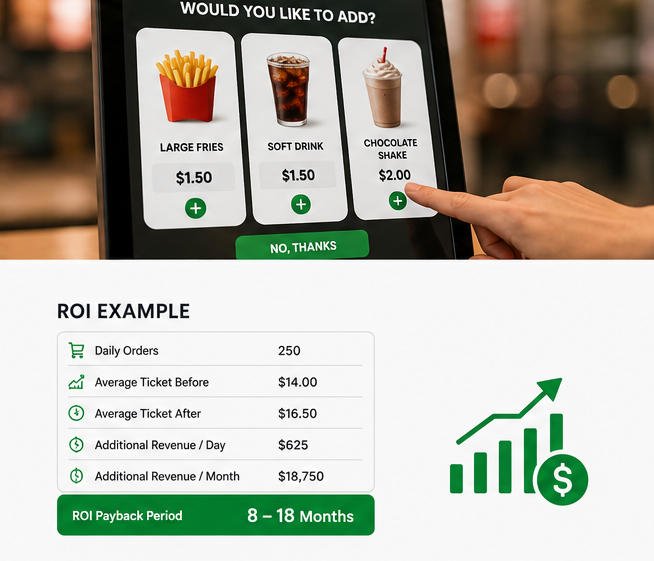
Considérez cet exemple simplifié.
Profil du restaurant :
- 250 commandes/jour
- Ticket moyen avant borne : $14
- Ticket moyen après borne : $16,50
Revenu quotidien avant :
250 × $14 = $3,500
Revenu quotidien après :
250 × $16,50 = $4,125
Revenu supplémentaire :
$625/jour
Augmentation mensuelle :
Environ $18,750
Si les économies de main-d’œuvre sont également incluses, de nombreux restaurants récupèrent leur investissement dans les bornes en 8 à 18 mois, selon la taille du déploiement et le volume d’activité.
Avantages financiers supplémentaires au-delà des ventes
Les revenus ne sont pas le seul avantage.
Les restaurants réduisent également leurs dépenses opérationnelles grâce à :
- Des coûts de main-d’œuvre plus faibles
- Moins d’erreurs de commande
- Une réduction du gaspillage alimentaire
- Une meilleure prévision des stocks
- Gestion numérique des menus
- Des mises à jour promotionnelles plus faciles
- Une analyse améliorée
Ces améliorations opérationnelles contribuent à la rentabilité à long terme.
Choisir la bonne borne de commande en libre-service pour restaurant
Tous les bornes n’offrent pas la même valeur commerciale.
Lors de l’évaluation des solutions, les restaurants devraient considérer :
Matériel commercial durable
Conçu pour un fonctionnement continu au quotidien.
Écran tactile réactif
Interaction client rapide et intuitive.
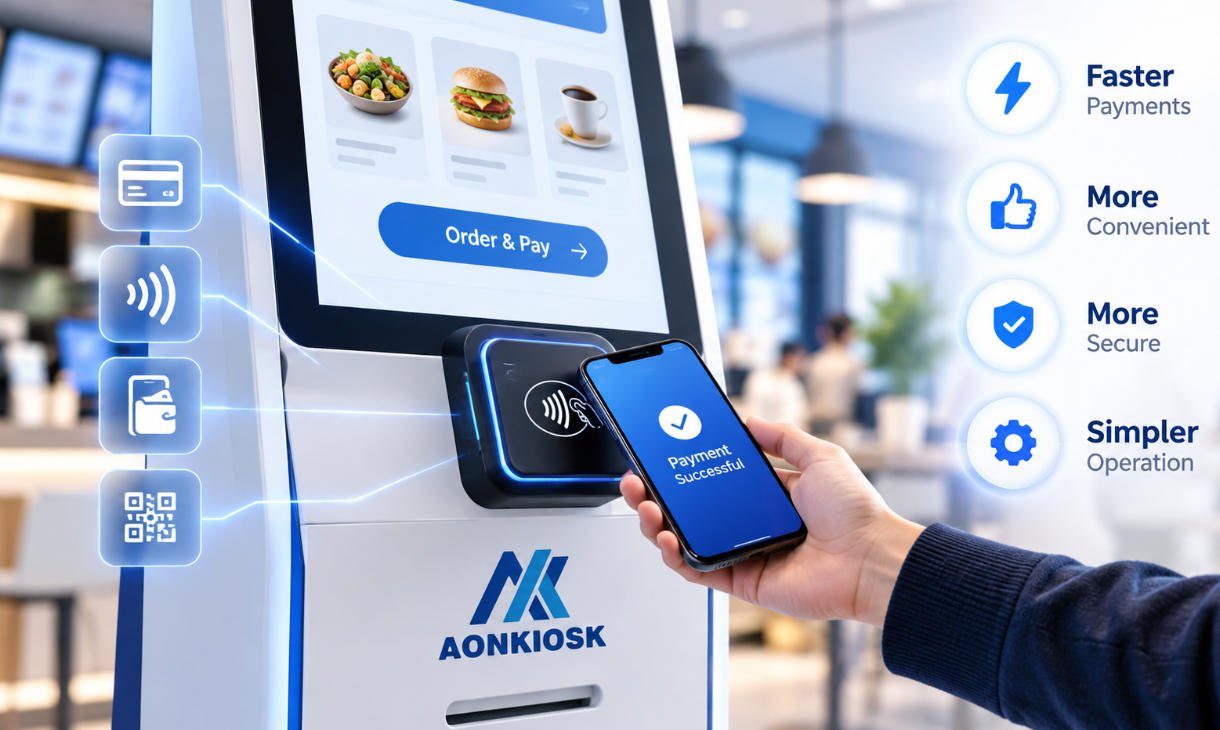
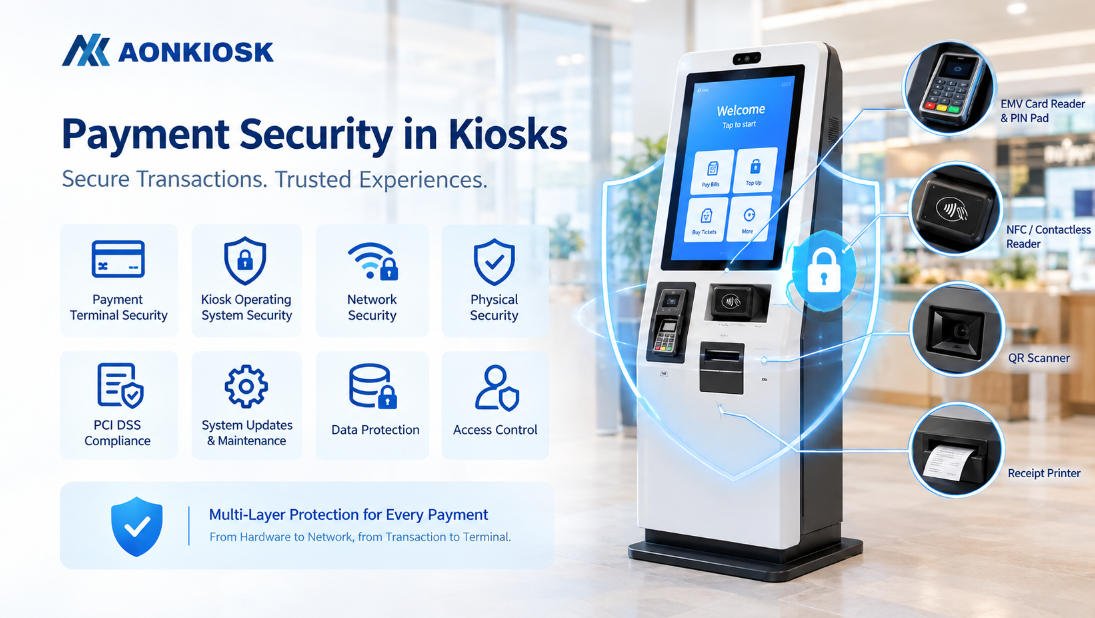
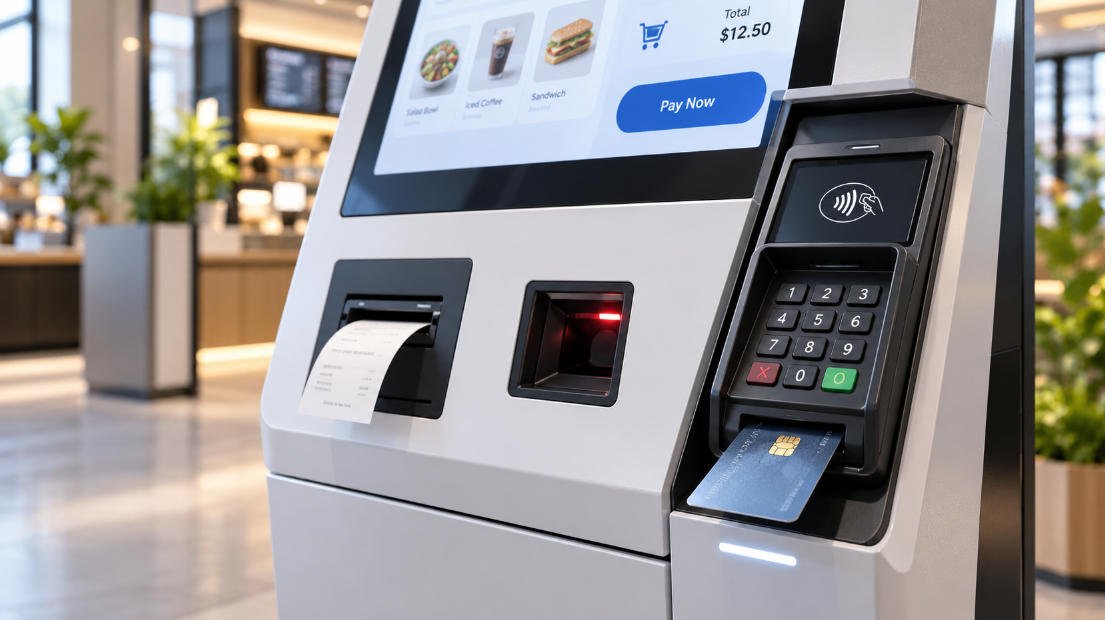
Intégration flexible des paiements
Prend en charge :
- EMV
- NFC
- Paiement par QR
- Portefeuilles mobiles
- Cartes de crédit
Compatibilité avec les systèmes de caisse (POS)
Le borne doit s’intégrer de manière transparente aux systèmes de caisse existants.
Gestion à distance
Les opérateurs doivent pouvoir mettre à jour facilement :
- Menus
- Les prix
- Promotions
- Disponibilité des produits
Personnalisation de la marque
L’interface doit refléter l’image de marque du restaurant via des logos, des couleurs et des campagnes promotionnelles.
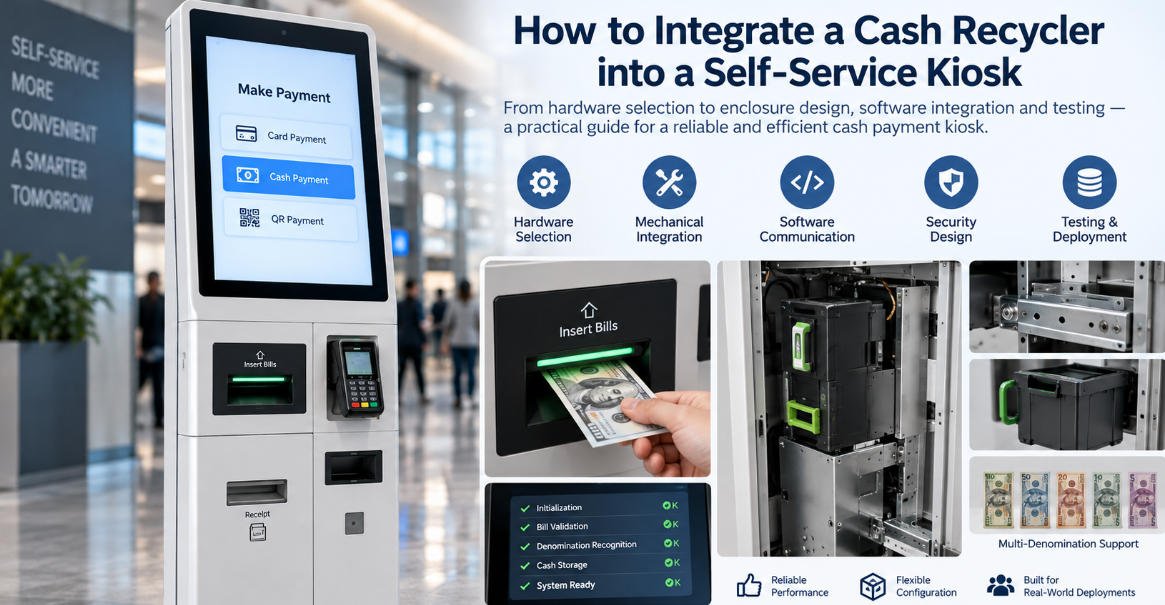
Chez AONKIOSK, Nous fabriquons des bornes de commande personnalisables pour restaurants, compatibles avec les projets OEM/ODM, intégrant plusieurs modules de paiement, lecteurs de codes-barres, imprimantes de tickets, lecteurs de QR codes, écrans clients, et une intégration fluide avec les systèmes de caisse pour les restaurants du monde entier.
Tendances futures en matière d’optimisation des revenus des restaurants
L’intelligence artificielle rend les bornes de commande encore plus performantes.
Les capacités émergentes incluent :
- Recommandations de produits basées sur l’IA
- Promotions de fidélité personnalisées
- Tarification dynamique
- Analyse du comportement client
- Commande vocale
- Reconnaissance faciale (lorsque la législation l’autorise)
- Optimisation des menus basée sur le cloud
À mesure que la technologie des restaurants évolue, les bornes de commande deviendront de plus en plus essentielles pour maximiser la rentabilité tout en améliorant l’expérience client.
Conclusion
Les restaurants d’aujourd’hui ont besoin d’une technologie qui ne se limite pas à automatiser les commandes — elle doit activement stimuler la croissance des revenus.
Les bornes de commande y parviennent en augmentant le panier moyen, en permettant des ventes additionnelles cohérentes, en réduisant les erreurs de commande, en améliorant l’efficacité opérationnelle et en servant davantage de clients pendant les périodes d’affluence.
Pour les restaurants en quête de croissance durable, investir dans une solution de borne moderne n’est plus simplement une commodité — c’est une décision stratégique qui impacte directement la rentabilité.
Que vous exploitiez un restaurant rapide, un café, un food court ou une franchise internationale, la borne de commande adaptée peut transformer les interactions clients en gains de revenus mesurables, tout en préparant votre entreprise à l’avenir de la restauration numérique.