





For restaurants operating in today’s competitive market, improving revenue is no longer just about attracting more customers—it’s equally important to maximize the value of every transaction.
Labor shortages, rising operating costs, and changing consumer expectations have accelerated the adoption of self-ordering kiosks worldwide. What began as a convenience feature has evolved into one of the most effective revenue-generating technologies in the food service industry.
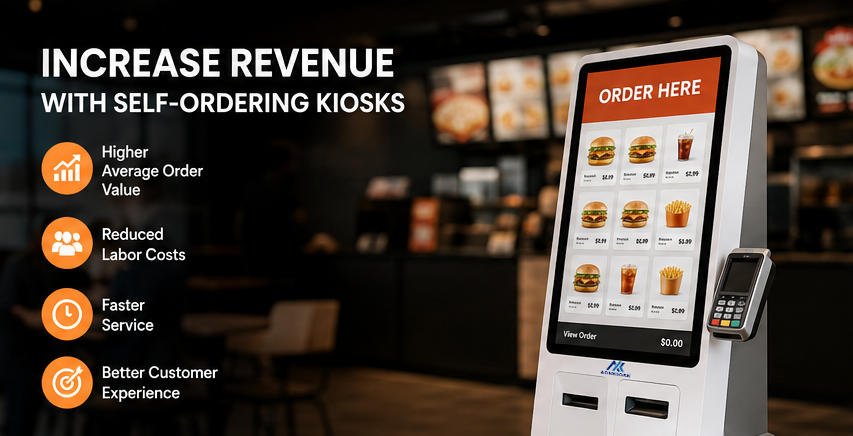
Modern self-ordering kiosks do far more than replace cashiers. They intelligently recommend add-ons, encourage meal upgrades, eliminate ordering mistakes, reduce waiting times, and allow restaurants to serve more customers during peak hours.
This article explains how restaurant kiosks increase sales, explores kiosk upselling statistics, analyzes real-world implementations, and demonstrates how restaurants calculate the return on investment (ROI) of deploying self-ordering kiosk systems.
Why Restaurants Are Investing in Self-Ordering Kiosks
Restaurants face several ongoing challenges:
- Rising labor expenses
- Increasing customer expectations for speed
- Higher order accuracy requirements
- Growing demand for contactless ordering
- Pressure to increase average ticket size
Unlike traditional cashier service, self-ordering kiosks allow customers to browse menus without feeling rushed, resulting in more thoughtful purchasing decisions.
Many restaurant operators discover that kiosks not only reduce labor dependency but also consistently increase average order value.
How Self-Ordering Kiosks Increase Restaurant Revenue
Restaurant revenue grows through multiple channels simultaneously rather than a single improvement.
1. Higher Average Order Value
The most significant revenue driver comes from increasing the amount each customer spends.
Unlike human cashiers, kiosks consistently recommend:
- Meal upgrades
- Combo offers
- Premium toppings
- Extra beverages
- Desserts
- Side dishes
Because these suggestions are automated and personalized, every customer receives the same selling opportunity.
Example:
Customer orders:
- Cheeseburger ($8)
The kiosk recommends:
- Upgrade to Combo (+$4)
- Large Fries (+$1)
- Extra Cheese (+$1)
- Milkshake (+$4)
A potential $8 order becomes an $18 purchase.
This is one of the primary reasons restaurants report significant increases in average ticket values after deploying self-order kiosks.
2. Consistent Upselling Without Employee Variability
Human cashiers often skip upselling because they are:
- Busy
- Tired
- Under pressure
- Inexperienced
- Focused on reducing queue times
Self-ordering kiosks never forget to recommend products.
Every transaction follows predefined selling logic.
Typical upselling rules include:
- Recommend drinks after burgers
- Offer desserts after meals
- Suggest larger portion sizes
- Recommend family meals
- Display limited-time promotions
- Promote high-margin products
This consistency creates predictable revenue growth.
The Psychology Behind Kiosk Upselling
Unlike face-to-face interactions, customers often feel less pressure when ordering from a screen.
They have time to:
- Browse the full menu
- Compare prices
- Read descriptions
- View product photos
- Customize meals
This relaxed purchasing environment encourages additional spending.
Visual merchandising also plays a major role.
High-quality food photography significantly increases purchase intent compared to text-only menus.
Restaurants can strategically place profitable items throughout the ordering journey.
Kiosk Upselling Statistics
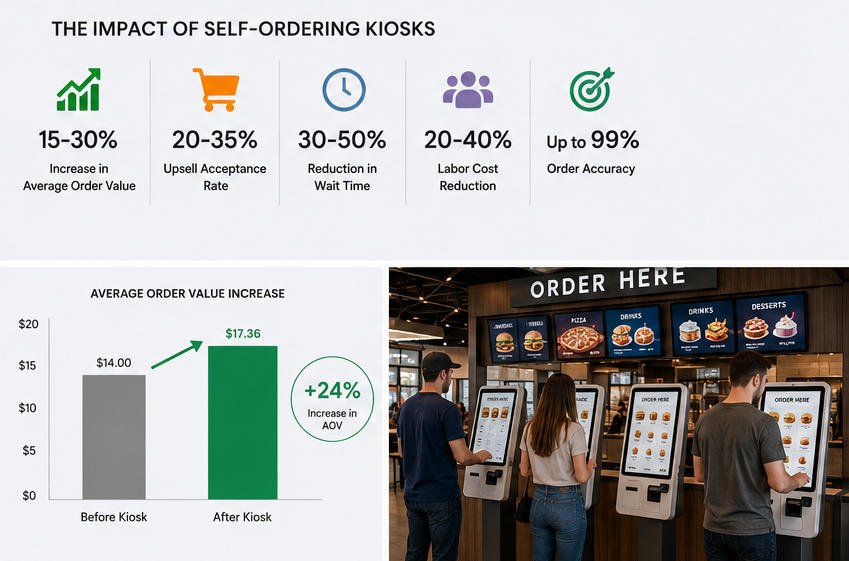
Numerous industry studies have demonstrated measurable improvements after implementing self-order kiosks.
Commonly reported results include:
| Metric | Typical Improvement |
|---|---|
| Average Order Value | 15–30% |
| Upsell Acceptance Rate | 20–35% |
| Order Accuracy | Up to 99% |
| Labor Cost Reduction | 20–40% |
| Customer Wait Time | Reduced by 30–50% |
| Ordering Speed | Increased by 25–40% |
While results vary depending on restaurant type, menu design, and kiosk software, many quick-service restaurants consistently report increased revenue following kiosk deployment.
The combination of higher order values and improved operational efficiency makes kiosks one of the fastest-return technology investments in modern food service.
Smart Upselling Mechanisms Used by Restaurant Kiosks
Meal Bundle Recommendations
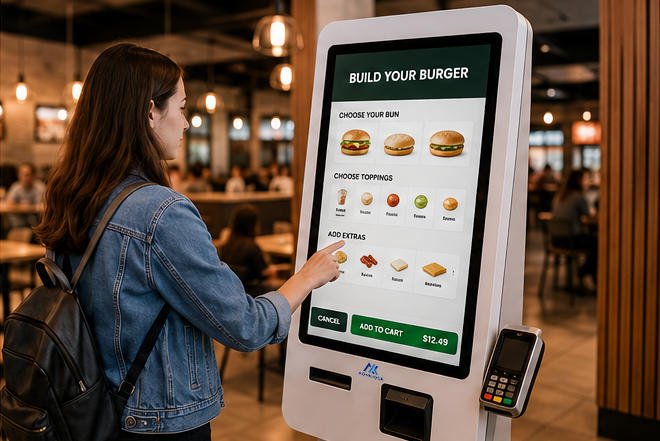
Instead of purchasing individual menu items, customers receive suggestions for complete meal combinations.
Example:
“Upgrade to a Combo and save $1.”
Bundles increase both customer satisfaction and restaurant revenue.
Premium Add-ons
Customers can easily personalize meals by adding:
- Bacon
- Cheese
- Avocado
- Extra meat
- Premium sauces
Customization becomes effortless through touchscreen selection.
Limited-Time Promotions
Digital kiosks can instantly promote:
- Seasonal products
- New menu items
- Holiday specials
- Happy hour offers
Unlike printed menus, promotions can be updated in minutes.
Intelligent Cross-Selling
Based on ordering behavior, kiosks recommend complementary products.
Examples include:
Burger → Fries
Pizza → Soft Drinks
Coffee → Pastries
Salad → Soup
Cross-selling naturally increases basket size.
Visual Product Recommendations
Food photography dramatically influences purchasing behavior.
Customers are more likely to purchase products when they see:
- High-resolution images
- Animated menu highlights
- Combo comparisons
- Promotional banners
Digital menus outperform static printed menus in encouraging impulse purchases.
Faster Service Means More Daily Revenue
Revenue growth doesn’t only come from larger orders.
It also comes from serving more customers.
Self-order kiosks reduce bottlenecks because multiple guests can place orders simultaneously.
Benefits include:
- Shorter queues
- Faster table turnover
- Increased throughput
- Better peak-hour performance
Restaurants can process significantly more orders during lunch and dinner rushes without hiring additional staff.
Reducing Order Errors Protects Revenue
Incorrect orders are expensive.
Common costs include:
- Food waste
- Refunds
- Replacements
- Customer complaints
- Negative reviews
Because customers directly select their own meals, self-order kiosks minimize communication errors.
Orders are transmitted digitally to the kitchen, reducing misunderstandings.
Higher order accuracy improves profitability while increasing customer satisfaction.
Real-World Restaurant Kiosk Success Stories
Case Study 1: Global Fast-Food Chain
A multinational quick-service restaurant introduced self-order kiosks across hundreds of locations.
After deployment, the company observed:
- Increased average transaction values
- More combo meal purchases
- Higher premium item sales
- Shorter ordering queues
Customers spent more time browsing the menu compared with cashier ordering.
Case Study 2: Regional Burger Restaurant
A regional burger franchise installed four self-order kiosks during a renovation.
Results after six months included:
- Average order value increased by 23%
- Labor allocation optimized during peak hours
- Customer wait time reduced by nearly half
- Upsell conversion improved significantly
Staff members shifted from taking orders to preparing food and assisting guests.
Case Study 3: Bubble Tea Chain
A beverage chain introduced self-service kiosks featuring:
- Drink customization
- Ice level selection
- Sugar level options
- Toppings
- Promotional upgrades
The intuitive interface encouraged customers to purchase additional toppings and premium ingredients, increasing average beverage revenue while improving ordering accuracy.
Calculating Restaurant Kiosk ROI
One of the biggest concerns for restaurant owners is whether kiosk investment pays off.
The answer depends on transaction volume, labor savings, and increased sales.
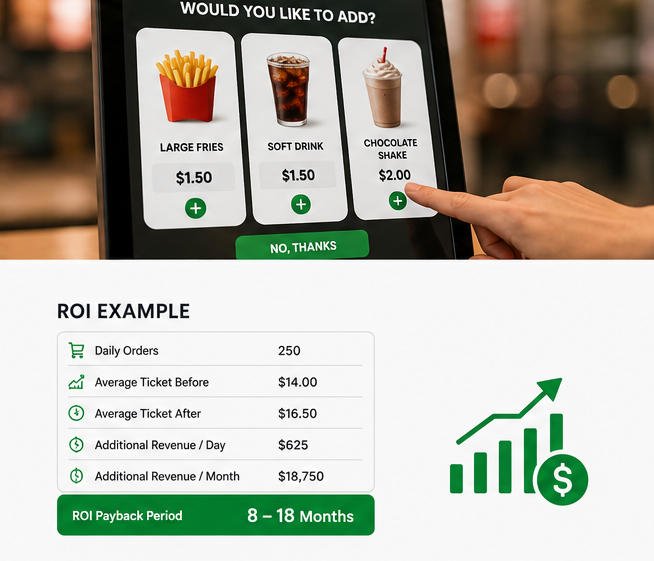
Consider this simplified example.
Restaurant Profile:
- 250 orders/day
- Average ticket before kiosk: $14
- Average ticket after kiosk: $16.50
Daily Revenue Before:
250 × $14 = $3,500
Daily Revenue After:
250 × $16.50 = $4,125
Additional Revenue:
$625/day
Monthly Increase:
Approximately $18,750
If labor savings are also included, many restaurants recover their kiosk investment within 8–18 months, depending on deployment size and operating volume.
Additional Financial Benefits Beyond Sales
Revenue isn’t the only advantage.
Restaurants also reduce operating expenses through:
- Lower labor costs
- Fewer ordering mistakes
- Reduced food waste
- Better inventory forecasting
- Digital menu management
- Easier promotional updates
- Improved analytics
These operational improvements contribute to long-term profitability.
Choosing the Right Restaurant Self-Ordering Kiosk
Not every kiosk delivers the same business value.
When evaluating solutions, restaurants should consider:
Durable Commercial Hardware
Designed for continuous daily operation.
Responsive Touchscreen
Fast, intuitive customer interaction.
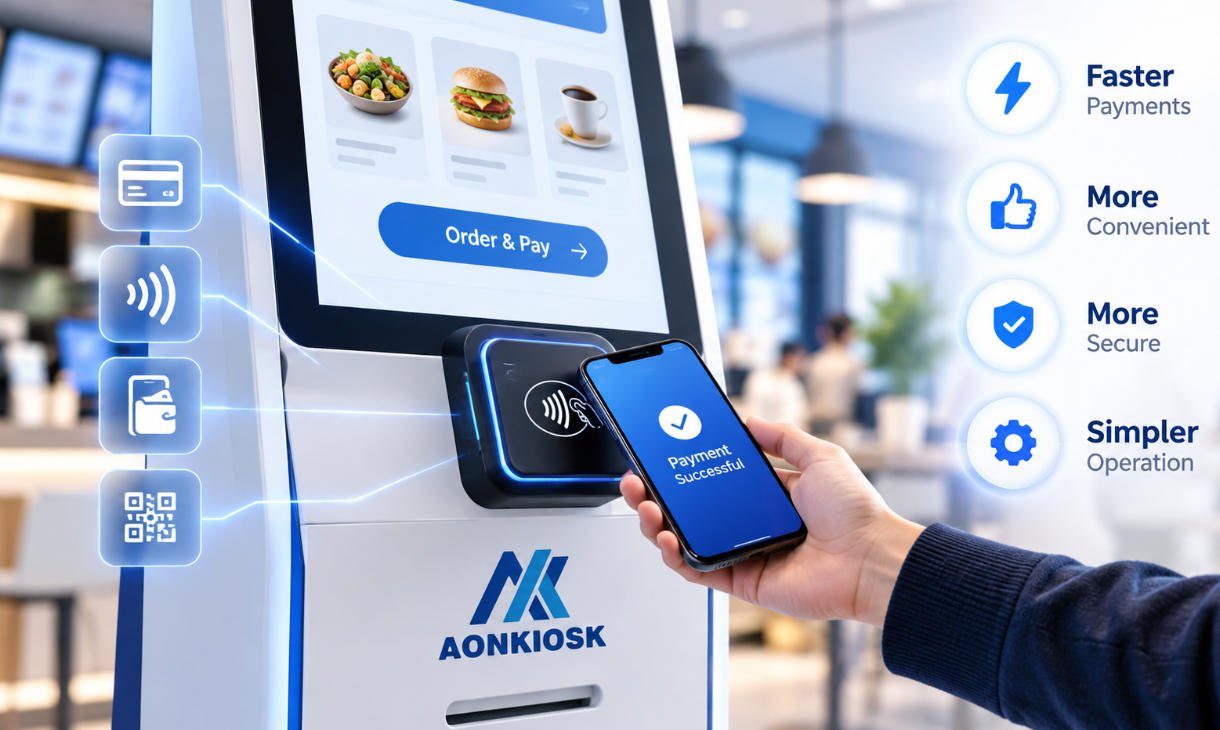
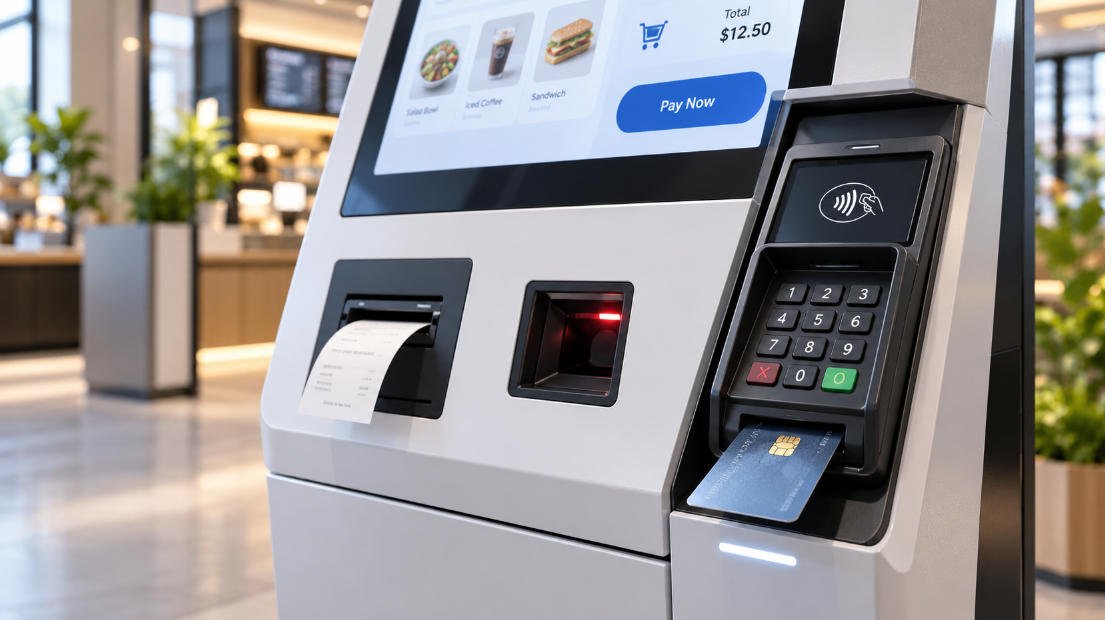
Flexible Payment Integration
Supports:
- EMV
- NFC
- QR payment
- Mobile wallets
- Credit cards
POS Compatibility
The kiosk should integrate seamlessly with existing POS systems.
Remote Management
Operators should easily update:
- Menus
- Prices
- Promotions
- Product availability
Custom Branding
The interface should reflect restaurant branding through logos, colors, and promotional campaigns.
At AONKIOSK, we manufacture customizable restaurant self-ordering kiosks that support OEM/ODM projects, multiple payment modules, barcode scanners, receipt printers, QR code readers, customer displays, and seamless POS integration for restaurants worldwide.
Future Trends in Restaurant Revenue Optimization
Artificial intelligence is making self-order kiosks even more powerful.
Emerging capabilities include:
- AI-powered product recommendations
- Personalized loyalty promotions
- Dynamic pricing
- Customer behavior analysis
- Voice ordering
- Facial recognition (where legally permitted)
- Cloud-based menu optimization
As restaurant technology continues evolving, self-ordering kiosks will become increasingly important for maximizing profitability while enhancing customer experiences.
Conclusion
Restaurants today need technology that does more than automate ordering—it must actively drive revenue growth.
Self-ordering kiosks accomplish this by increasing average order value, enabling consistent upselling, reducing order errors, improving operational efficiency, and serving more customers during busy periods.
For restaurants seeking sustainable growth, investing in a modern kiosk solution is no longer simply a convenience—it is a strategic business decision that directly impacts profitability.
Whether you’re operating a quick-service restaurant, café, food court, or international franchise, the right self-ordering kiosk can transform customer interactions into measurable revenue gains while preparing your business for the future of digital dining.