





Labor expenses have become one of the largest operating costs for restaurants worldwide. Rising minimum wages, employee turnover, labor shortages, and increasing customer expectations have pushed restaurant operators to seek more efficient operating models. One of the most effective solutions is the implementation of self-service kiosks.
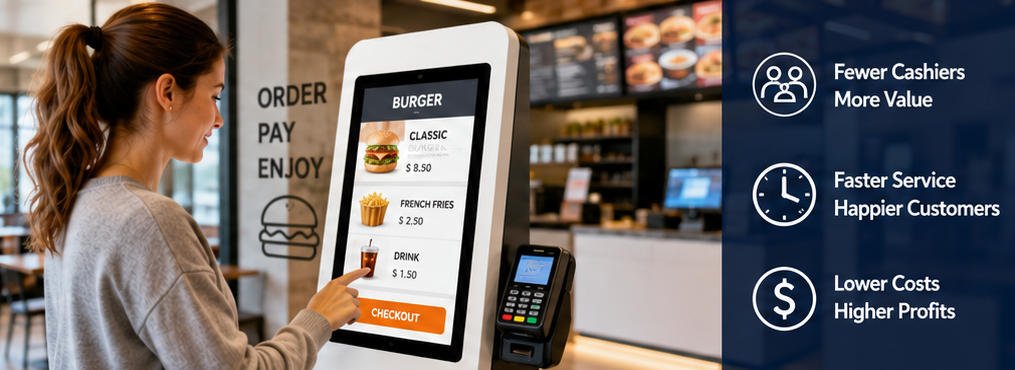
A modern self-ordering kiosk does far more than replace a traditional ordering counter. It automates repetitive tasks, improves order accuracy, increases employee productivity, and enables restaurants to serve more customers without continuously expanding their workforce.
For quick-service restaurants (QSRs), cafés, food courts, and fast-casual brands, investing in a kiosk system is no longer simply a technology upgrade—it has become a strategic decision for long-term profitability.
This guide explains how kiosks reduce restaurant labor costs, where the savings come from, and why more restaurant operators are choosing restaurant automation.
Why Labor Costs Continue to Rise
Restaurant payroll typically represents 25%–40% of total operating expenses, depending on service style and location.
Labor costs include:
- Cashiers
- Front counter staff
- Order takers
- Training expenses
- Employee turnover
- Overtime wages
- Scheduling inefficiencies
- Human error correction
Unlike food costs, labor expenses continue to increase every year, making automation an increasingly attractive investment.
Self-service kiosks directly target many of these operational challenges.
Staffing Reduction
Replace Repetitive Order-Taking Tasks
One of the biggest advantages of a kiosk is its ability to automate the ordering process.
Instead of employees spending time:
- Greeting customers
- Explaining menu items
- Taking orders
- Modifying meals
- Processing payments
customers complete these tasks independently.
This allows restaurants to reduce the number of employees required during each shift.
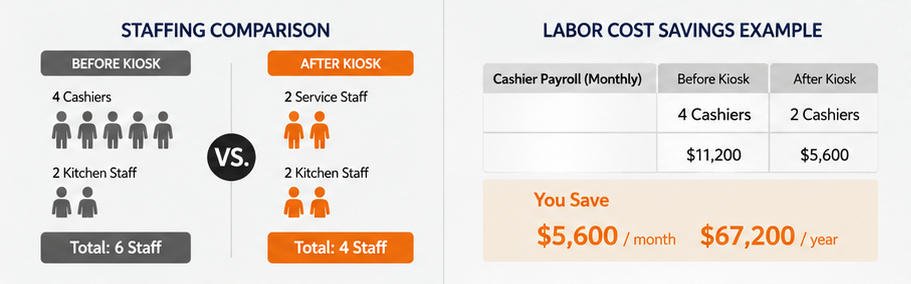
For example:
Traditional Counter:
- 4 cashiers
- 2 kitchen staff
With Self-Ordering Kiosks:
- 2 customer service staff
- 2 kitchen staff
Rather than eliminating employees entirely, kiosks allow businesses to reassign staff to higher-value responsibilities.
Better Staff Utilization
Employees become more productive because they spend less time performing repetitive work.
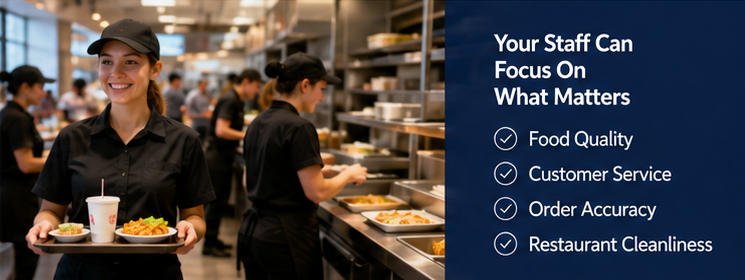
Staff can instead focus on:
- Food preparation
- Order quality
- Guest assistance
- Dining room cleanliness
- Delivery fulfillment
- Curbside pickup
The restaurant operates more efficiently without increasing headcount.
Reduced Employee Turnover
Cashier positions often experience the highest turnover.
Frequent hiring creates additional costs:
- Recruitment
- Interviews
- Training
- Uniforms
- Payroll administration
- Productivity loss
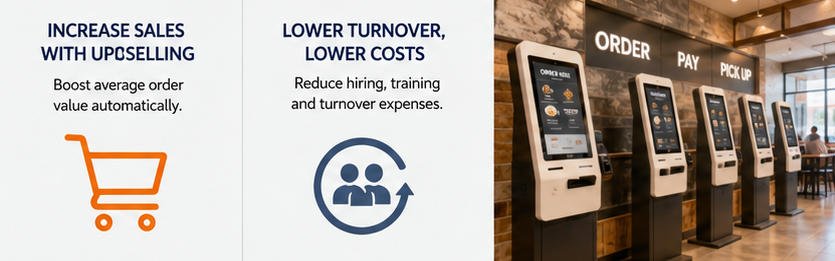
Self-ordering kiosks reduce dependence on entry-level cashier roles, lowering hiring frequency and improving workforce stability.
Easier Peak Hour Management
Lunch and dinner rushes often require temporary staffing increases.
Without kiosks:
- Long customer lines
- Increased payroll
- Slower service
- Customer frustration
With kiosks:
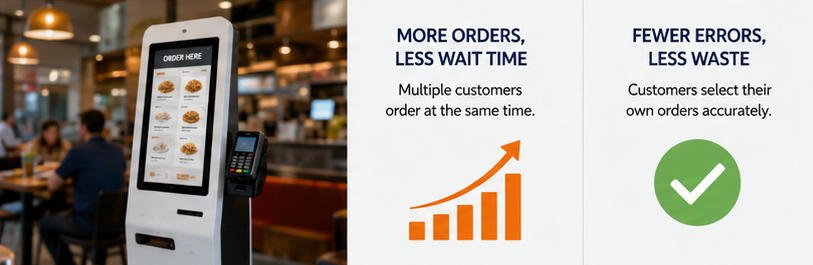
Multiple customers can place orders simultaneously, significantly increasing ordering capacity without adding additional employees.
Cost Breakdown
Understanding exactly where savings occur helps restaurant owners calculate return on investment.
1. Lower Cashier Payroll
This is usually the largest direct saving.
Example:
Restaurant employs:
- 4 cashiers
- Average salary: $2,800/month
Monthly payroll:
4 × $2,800 = $11,200
Installing several kiosks may reduce cashier requirements to two employees.
New payroll:
2 × $2,800 = $5,600
Monthly savings:
$5,600
Annual savings:
$67,200
2. Lower Training Costs
Every new cashier requires training on:
- POS operation
- Menu knowledge
- Promotions
- Payment procedures
- Customer service
A kiosk standardizes these processes through software, reducing onboarding time for new employees.
3. Fewer Order Errors
Manual ordering creates mistakes such as:
- Wrong toppings
- Missing items
- Incorrect sizes
- Misheard requests
These errors lead to:
- Food waste
- Refunds
- Customer complaints
- Additional labor
Customers using kiosks enter their own selections, dramatically improving order accuracy.
4. Faster Order Processing
A cashier typically serves one customer at a time.
Four kiosks can process four or more customers simultaneously.
Benefits include:
- Shorter queues
- More orders during peak periods
- Increased throughput
- Higher customer satisfaction
Higher efficiency means the restaurant can handle greater demand without hiring additional staff.
5. Reduced Overtime
When restaurants become busy, employees often work overtime.
Automation reduces:
- Overtime pay
- Staff fatigue
- Scheduling complexity
This contributes to lower overall labor expenses.
6. Less Administrative Work
Managers spend less time on:
- Scheduling extra cashiers
- Correcting order mistakes
- Cash handling
- Register balancing
This allows management to focus on improving operations and customer experience.
Long-Term Savings
While kiosks require an upfront investment, the financial benefits continue for many years.
Continuous Payroll Savings
Unlike temporary cost reductions, kiosk labor savings occur every day.
Year after year, restaurants continue reducing payroll expenses while maintaining service quality.
Increased Sales Through Upselling
An additional benefit of kiosks is automated upselling.
The system consistently suggests:
- Meal upgrades
- Extra toppings
- Drinks
- Desserts
- Combo meals
Unlike employees, kiosks never forget to recommend additional items.
Many restaurants report higher average order values after introducing self-ordering kiosks.
Higher revenue further improves return on investment.
Improved Customer Experience
Customers enjoy:
- No ordering pressure
- Visual menus
- Easy customization
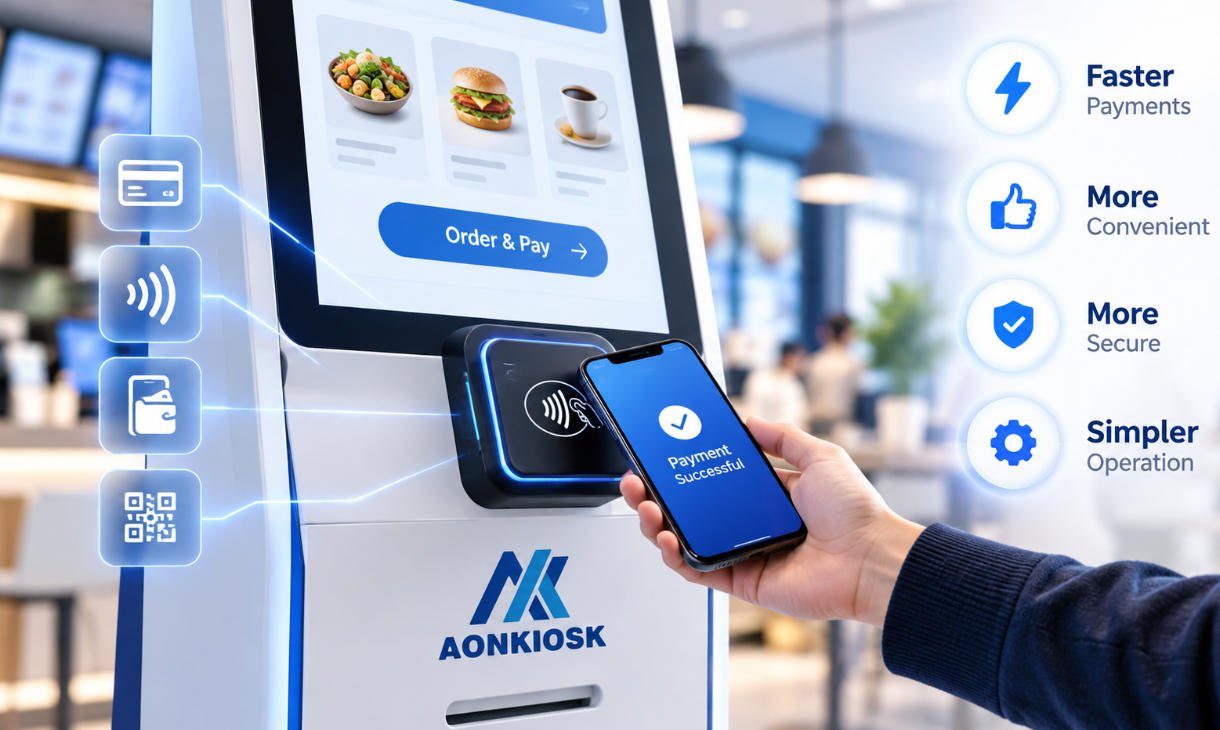
- Multiple payment methods
- Faster service
Satisfied customers are more likely to return, increasing customer lifetime value.
Scalability
As restaurant chains expand, maintaining consistent staffing becomes increasingly difficult.
Kiosks provide standardized ordering across every location.
Benefits include:
- Consistent customer experience
- Lower training requirements
- Easier expansion
- Centralized menu management
Better Employee Satisfaction
Employees generally prefer helping customers rather than repeatedly taking orders.
Automation allows staff to focus on meaningful customer interactions instead of repetitive transactional tasks.
Higher job satisfaction often contributes to better employee retention.
Example Labor Savings Scenario
| Before Kiosk | After Kiosk |
|---|---|
| 4 Cashiers | 2 Customer Service Staff |
| Long Queues | Faster Self-Service Ordering |
| Frequent Order Errors | Improved Order Accuracy |
| High Overtime Costs | Lower Overtime Requirements |
| Manual Upselling | Automated Upselling |
| Continuous Hiring | Reduced Staff Turnover |
Over several years, these operational improvements often exceed the original kiosk investment many times over.
Why Choose AONKIOSK?
At AONKIOSK, we manufacture reliable OEM and ODM self-service kiosk hardware designed specifically for restaurants, cafés, food courts, and quick-service chains.
Our restaurant kiosk solutions support:
- Large commercial touch displays
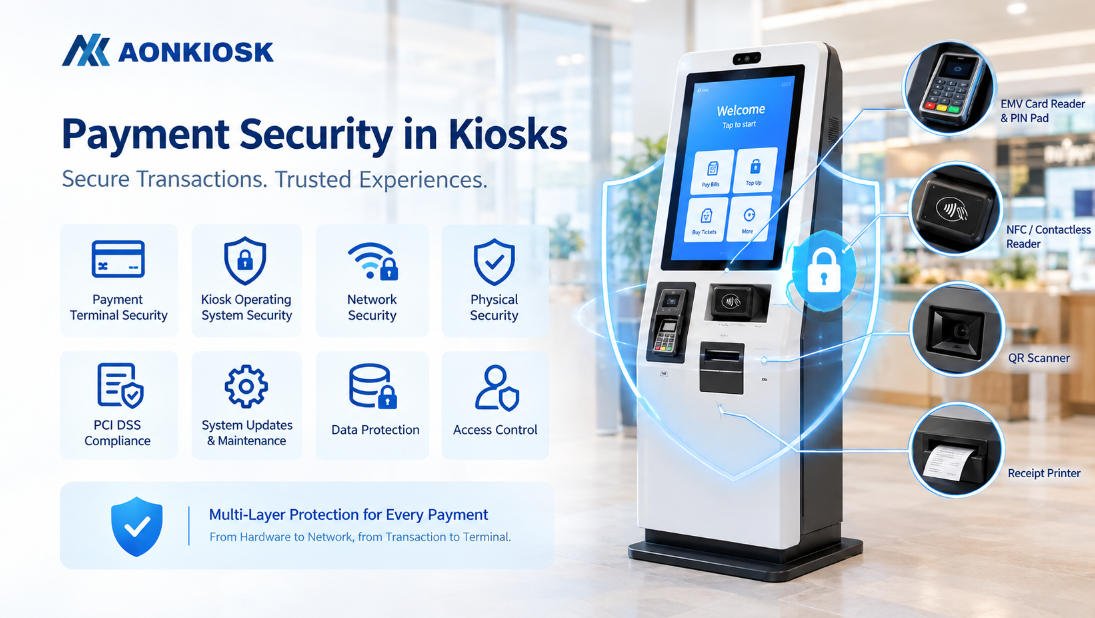
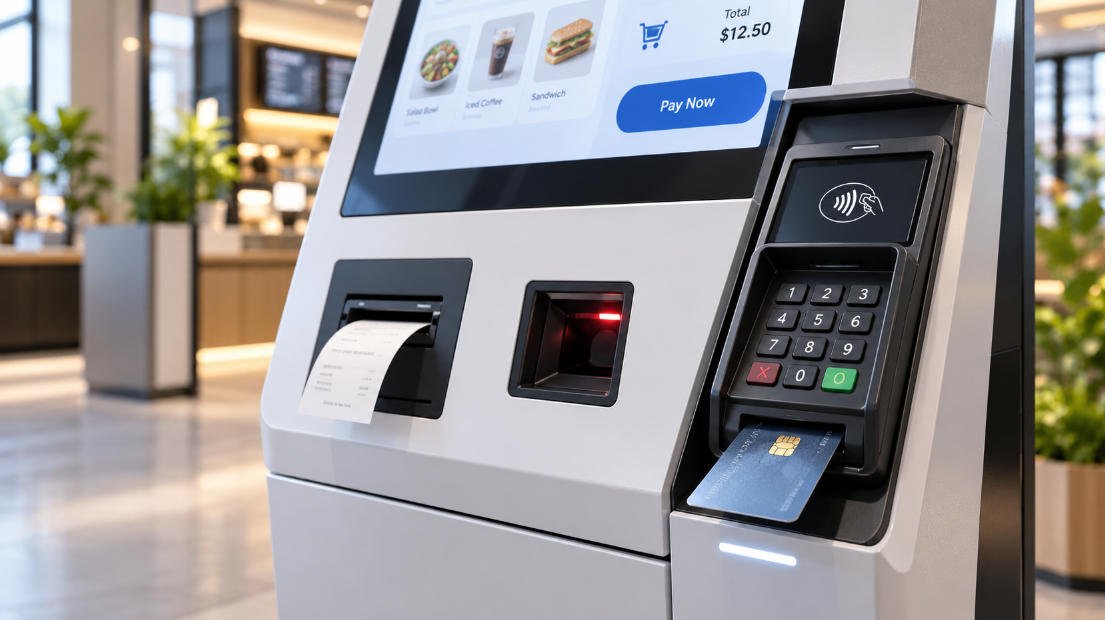
- EMV and NFC payment terminals
- QR code and barcode scanners
- Receipt printers
- Kitchen Display System (KDS) integration
- POS hardware compatibility
- Custom branding and enclosure design
- Flexible OEM/ODM manufacturing
- Small-batch customization
- Global deployment support
Whether you’re launching a single restaurant or scaling hundreds of locations, AONKIOSK provides durable, industrial-grade kiosk hardware built for long-term operation.
Conclusion
Reducing labor costs is no longer just about hiring fewer employees—it is about improving operational efficiency. Self-service kiosks automate routine tasks, reduce staffing pressure, minimize order errors, and increase throughput without sacrificing customer experience.
For restaurant operators facing rising wages and labor shortages, kiosks offer measurable restaurant automation savings while creating a faster, more consistent, and scalable ordering process. Over time, the combination of payroll reduction, increased productivity, and higher average order values makes self-ordering kiosks one of the most valuable technology investments a restaurant can make.